Awards and citations:


1997: Le Prix du Champagne Lanson Noble Cuvée Award for investigations into Champagne for the Millennium investment scams

2001: Le Prix Champagne Lanson Ivory Award for investdrinks.org

2011: Vindic d'Or MMXI – 'Meilleur blog anti-1855'

2011: Robert M. Parker, Jnr: ‘This blogger...’:

2012: Born Digital Wine Awards: No Pay No Jay – best investigative wine story

2012: International Wine Challenge – Personality of the Year Award


Showing posts with label Huet. Show all posts

Tuesday, 25 December 2018

Joyeux Noël et bonnes fêtes +

Tree

Happy Christmas!


Some recent bottles: 


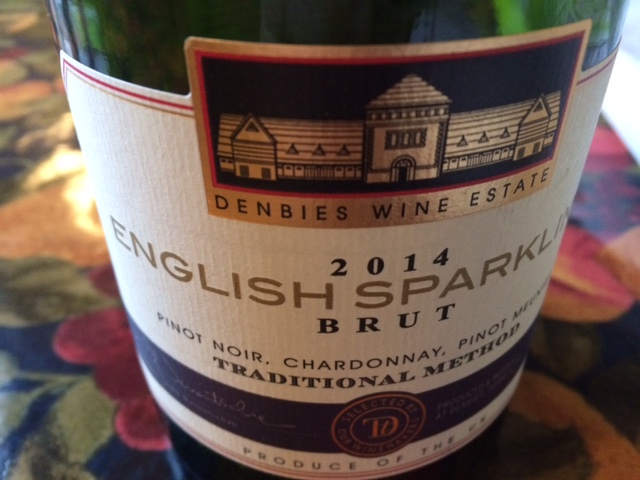
Denbies-Sains14

Denbies-Sains14bl

A sign of the times – a Sainsbury's Taste the Difference English Sparkling Wine (2014) from Denbies Estate – at 107 hectares the UK's largest wine domaine.  Made as so many UK sparkling wines are from the classic blend of Chardonnay, Pinot Meunier and Pinot Noir. Very clean citric fruit with an attractively austere finish.

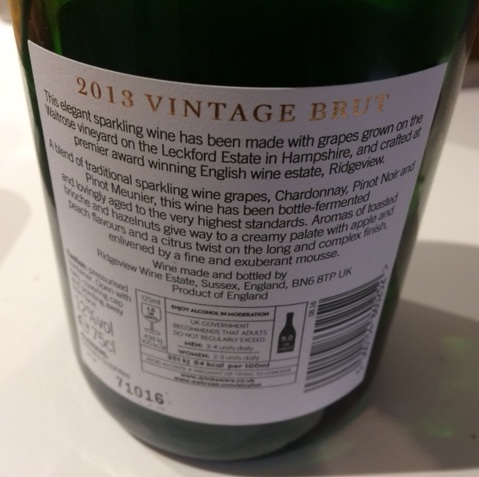
13BrutJPG

13BrutBl


We drank the 2013 Brut Leckford Estate (roughly 55% Chardonnay grape, 25% Pinot Noir and 20% Pinot Meunier) from Hampshire (UK) on the same occasion as the 2014 Denbies. I had hesitated over the order to serve this two English sparklers. Fortunately the Leckford, which I served second and which comes from the Waitrose estate and was bought last year from one of their stores, was softer and rounder than the Denbies, so I guessed right. Denbies was the apéro and while, the Leckford was poured as the follow up apéro it also worked well with our first course – salmon ceviche.


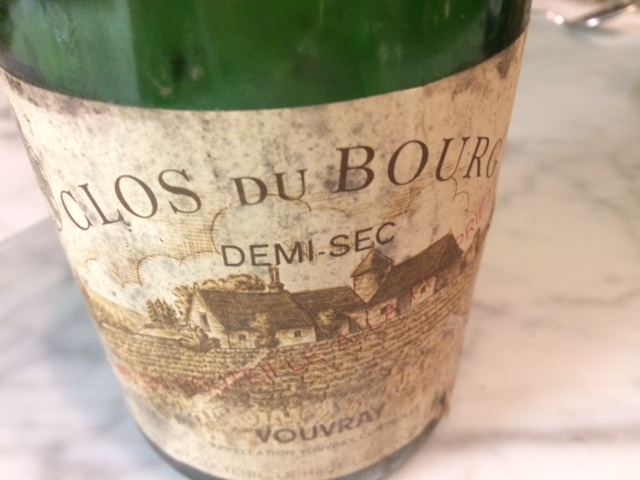
83 Clos du Bourg -neck L

83 Clos du Bourg demi-sec

As a treat before leaving London for the Loire we opened this bottle of 1983 Clos du Bourg, Vouvray from Domaine Huet. The level was slightly down from being full and there appeared to have been some slight seepage from the cork. I wasn't concerned, however, as we have had other old bottles from Huet where the level was much lower and the wine had survived amazingly well. The 1983 is still very youthful with touches of honey but still surprisingly austere in the long finish. By 1983 Noël Pinguet, Gaston Huet's son in law, was making the wine. I remain surprised that two generous men were capable of making wine that can remain austere for many years.


2005 Côt

Lastly a bottle of the 2005 Côt (Malbec) from the much missed Clos Roche Blanche – Catherine and Didier have now retired. Still youthful, concentration of black fruits and tight structure – obviously plenty of life left in this.

Tuesday, 24 October 2017

Several bottles in search of a 70th birthday celebration


Elegant, Touraine Brut, Château de l'Aulée 
Mainly Chenin Blanc with a little Chardonnay

Back to Tuesday 3rd October and a 70th birthday celebration. We warmed up with a bottle of Elegance, Touraine Brut from Château de l'Aulée before moving onto Jacky Blot's Triple Zéro, a firm favourite from Montlouis.   


Apéros over it was time for the first course a largely seasonal salad with goats' cheese, lardons and a selection of different mushrooms including cèpes and girolles. This was accompanied by a magnum of the 2009 Clos Saint André, Fiefs Vendéens from Jérémie Mourat. 100% Chenin Blanc this had the richness and soft acidity that worked very well with the salad 


With the main course a couple of plain roasted Poulet de Racan a couple of bottles of the classic 1996 Vieilles Vignes, Saumur-Champigny from Château de Villeneuve. With aged this wine has developed lovely complexity while still remaining youthful. This 1996 must surely be good for at least another 10-15 years and probably more.    


Back in time for the cheese with the 1961 Vouvray Le Haut-Lieu Demi-Sec from Domaine Huet. Still amazingly youthful it opened out in the carafe and then in glass. I probably should have opened and decanted this several more hours in advance. Even so it was stunning – wonderfully precise with some honeyed tones.  


We finished with a rich chocolate birthday cake. The 1988 Banyuls Cuvée Francis Cantié from Domaine la Tour Vieille with its rich nutty, raisined and coffee flavours. 

Thursday, 3 August 2017

1983 Vouvray Moelleux Clos du Bourg, Domaine Huet

1983 Clos du Bourg Moelleux, Domaine Huet


Noticing that there was a slight leak through this 1983's cork and that the level was a little low, we decided that it was time to pull the cork on this 1983 moelleux. 

Despite the slightly low level and a cork that crumbled, so that the lower part of it ended up in the wine, necessitating decanting. Irrespective of the condition of the decanting was a good idea, as it often is for white wines, as it enabled the 83 to open up. 

I made a classic mistake of rather over-chilling the wine, so that initially the 1983 was very austere, especially in the finish, and not at all clear why it was a moelleux. However, given time to open up in the decanter along with the rise in temperature, the 1983 took on more concentration and richness – a lovely bottle.

The Huet wines appear to resist low levels. This 1985 was only slightly down in comparison to a 1976 Huet Moelleux that I opened a few years ago with at least a third of the bottle gone. Remarkably the 76 was still on form!    

Sunday, 3 May 2015

Tony 'Mr Canada' Aspler comes to dinner

Tony Aspler@work during 2014 DWWA

Friday afternoon saw the end of the main section of judging for the 2015 Decanter World Wine Awards. A small panel will soon decide on the International Trophies – the top wines from more than 16,000 entered this year.

Tony Aspler, now the doyen of Canadian wine writers, was over in London for the DWWA as the regional chair for Canada. He came to dinner on Friday. 

2008 Pinot Reserve Chapel Down

After a very busy day judging it was good to start the evening with this fine English sparkling wine. It is a blend of Pinot Blanc and Pinot Noir, which spends a minimum of 5 years on its lees. The resulting wine is complex: rich with notes of toast and brioche.  

 1995 Le L' d'Or de Pierre Luneau, Muscadet de Sèvre et Maine sur lie 


I have been regional chair for the Loire since 2003 and this edition has very clearly been the most successful in terms of gold medals awarded – a total of 10. Last year we awarded a then record of four golds. In the 2015 edition Muscadet played a significant part – highlighting both the quality of the 2014 vintage but also underlining what efforts have been made in the Pays Nantais to raise quality. 

There have, of course, always been quality-minded producers in the Pays Nantais like Pierre and Monique Luneau. Although a very drinkable and spectacular 1995 Muscadet will surprise some, lovers of Muscadet will not be surprised that this 1995 L d'Or has aged brilliantly and remains youthful. The ceviche of tuna, scallops and salmon was a very good foil to Pierre and Monique's wine. 
   
1980 Châteauneuf du Pape
Château de Beaucastel 


The label is slightly askew ....

Main course was a simply roasted chicken with the intention that the 1980 Beaucastel should not perhaps be overwhelmed by strong flavours. Although I opened the 1980 about an hour or so before we started to drink it I didn't decant it until just before before serving as on tasting it when first opened the wine seemed quite delicate so I didn't want to take the risk of it fading in the decanter. This may have been a mistake as the wine opened up while we drank it with the final glass being the most impressive. An example of how as wines age regions move closer together with the 1980s light bricky colour and silky texture approaching Burgundy.  

1999 Le Mont Demi-Sec, SA Huet

No dessert – instead a selection of cheese to accompany this 1999 Le Mont Demi-Sec from Huet. Honey, quince with lovely balance of this fruit and fresh but ripe acidity in the finish. Showing some evolution but brilliantly precise and surely good for at least the next 30 or 40 years. A bottle, that dates from the time when Gaston Huet was still alive, which illustrates why demi-sec is perhaps the most classic style of Vouvray. Simply a treat!  

Monday, 24 October 2011

Les 5 du Vin: post on 'agreeable, little wines from the Loire'

Un petit vin?!: 1919 Le Mont Vouvray Moelleux@90 years young 

My post on Les 5 du Vin this week centres around a conversation in a brasserie in Troyes and the view of the Loire as the home of modest little wines.

Sunday, 9 May 2010

Wineries not to be missed?

River Indre in Loches passing the George Sand hotel and restaurant


 A message received yesterday:

'Dear Jim,
I just stumbled across your blog about loire valley wines. My family and I will be traveling to Loire soon. Specifically, we are staying near Loches for a week. We love our wine but are by no means experts. I was wondering if you might give me some suggestions of wineries not to be missed. With so many options I am a bit overwhelmed. Any info you could pass on would be of great help however, please do not feel obligated to respond. I know you must get lots of questions like this. Thank you so much.'

**

Loches is a little way out from the Loire's main wine producing areas. For instance both Vouvray and Chinon are about an hour's drive away with Montlouis slightly closer at around 50 minutes. Closer are the two main producers of Touraine Noble Joué – Jean-Jacques Sard and Rousseau Frères in Esvres about half an hour away from Loches in the direction of Tours. Noble Joué is a little known but long established rosé made from three Pinots – Noir, Meunier and Gris. Of the two Rousseau is the larger concern with nearly 20 hectares of vines offering a range of other wines as well as Noble Joué. 

Also around 30 minutes away from Loches are the producers in the Cher Valley. People to visit would include Jean-François Mériau (Vignobles des Bois Vaudons) in Saint-Julien-de-Chédon and Vincent Ricard in Thésée.  

Going further afield then Jacky Blot's Domaine de la Taille aux Loups in Husseau (Montlouis) where you can buy his Vouvray and Bourgueil as well as Montlouis is certainly recommended as is the François Chidaine's La Cave Insolite in Montlouis. 

Across the river in Vouvray my choices include Domaine Huet, Champalou, Foreau, Bernard Fouquet (Domaine des Aubuisières) and Alexandre Monmousseau's Château Gaudrelle, whose tasting room and winery in now at the western end of Rochecorbon

If you decide to go to Chinon my choices would include Baudry-Dutour (tasting room in Cravant-les-Coteaux), Charles Joguet (Sazilly), Domaine de Noblaie (Jérôme Billard in Ligré) and Château de Coulaine (Etienne and Pascale Bonnaventure in Beaumont-en-Véron).

There are many other possibilities and much depends upon how far you want to drive and how many places you wish to visit. Mentioning them all would make for a very long post! 

Thursday, 3 September 2009

Lunch with Keith Prothero@theRSJ

2 September 2009

Keith Prothero considering the 1989 Clos de la Dioterie, Charles Joguet

Had a very agreeable lunch with Keith Prothero, who is involved in various charity (just giving) and wine projects including the Pebbles Project, Mullineux Wines and is an investor in the award winning The Sampler.

Apero: 1976 Le Mont Vouvray demi-sec, Domaine Huet

This is one of the remaining bottles that we bought during one of several visits to Domaine Huet in the early 1980s. We bought a number of 1976s – mainly moelleux. Many of them have had problematic corks – not corked but not well sealed so several of them have been quite ullaged. One, indeed, that we tried about a year to 18 months ago was only two-thirds full. Nevertheless I pulled the cork, fearing the worse, and was amazed that it was still fine and not oxidised.

This demi-sec was less ullaged – high shoulder – but was probably more affected. A question of being demi-sec rather than moelleux, the higher level of sugar providing greater protection? Mid to deep gold with definite notes of oxidation on the nose; on the palate this still has that wonderful balance of honeyed fruit and acidity that makes Huet's wines so thrilling. Slightly baked fruit – a reminder of how hot and dry 1976 was. (In the UK Denis Howell was famously appointed 'Minister for Drought' whereupon the skies opened a few days later!)

This being a déjeuner de la modération Keith and I kept some of the 1976 to try later on – it worked well with my linguine and crab and, a while later, with the blue cheese. I had put it in a carafe and over the course of a couple of hours or so it opened up and certainly didn't become more oxidised, although I do think that due to the ullaging it wasn't as good as it might have been. Nevertheless memorable.


First course: 1998 Les Cormiers, Saumur Blanc, Château de Villeneuve

Les Cormiers is Jean-Pierre Chevallier's top cuvée of Saumur Blanc, vinified in 500 litre barrels with a proportion of new oak. JP is always keen to keep Chenin's acidity, so there is no malo here. The 1998 is an interesting contrast to the 1999, one of JP's really great Les Cormiers. The 1999 is much richer, creamier, more flattering than the 1998, which was a difficult year with a wet and cool September. The quite austere 1998 reflects this with precise minerality – still very youthful. Tasted blind it would be difficult to divine that this wine is now nearly 11 years old. Worked well with both Keith's quiche and my linguine and crab.


1996 Grand Clos, Saumur-Champigny, Château de Villeneuve

I'm a great fan of 1996 Loire reds – a really classic vintage – and I think Jean-Pierre Chevallier's Grand Clos is one of the finest examples of the vintage. It has the typical Loire Cabernet Franc herbal character with touches of sous bois, rich, silky fruit and good structure and length. It shows no sign of tiring and will still be a fine bottle for several years to come. Not surprising that the 1996 Grand Clos has stunned the Bordelais on a number of occasions in blind tastings.


1989 Clos de la Dioterie, Chinon, Charles Joguet

Next, the 1989 Closde la Dioterie Chinon from Charles Joguet. This was made when Charles was at the height of his powers, nearly a decade before he retired, and when he was generally considered the best Chinon producer. I've had several bottles of the 1989 Dioterie and, although it had lovely silky, voluptuous fruit on the palate – closer to Burgundy than to Bordeaux – on the nose it was beginning to show its age. Initially when we opened it, it had that typical Joguet animal, kidney nose. However, it soon took on that tiring, slightly pencil shavings nose.

And the wine of the lunch: I'd have to go for the Grand Clos, although all revealed the possibilities of the Loire.

Wednesday, 5 August 2009

Soirée de la moderation, discretion et surtout discrimination ......

4 August 2009

The line up

Back in the Loire arriving just in time to entertain Wink Lorch and Brett Jones of The Wine Travel Guides. They have been spending a few days in the Loire, which has included eating at two of the Loire's most interesting restaurants – C'Heu le Zib in Menetou-Salon and La Promenade in Le Petit-Pressigny. Both establishments I'm happy to report had met their expectations.

With a nice warm evening we are able to eat outside and take the opportunity to look at one or two bottles.

1986 Clos du Bourg Moelleux Vouvray Domaine Huet

We started with the 1986 Clos du Bourg Moelleux, Vouvray, Huet SA. As is so often the case with the Huet wines it is very difficult to judge the age of this wine from the colour, which is light gold – paler than you might imagine a 23 year old wine would be. Delicately sweet and beautifully balanced with crisp, precise acidity, this made a very fine apéritif. There was some discussion whether this really was a moelleux. It certainly wasn't demi-sec – too much residual sugar. My guess is that it has between 50 and 65 grams of residual sugar. This is, however, very much a guess as the acidity probably masks to sugar and makes the wine appear drier than it is analytically.

It is also I fancy an assumption that moelleux means sweet enough to drink with a dessert, which is often not the case. This, of course, underlines the stupidity of those who insist on describing all sweet wines as dessert wines.(I could go on at some length here but won't on this occasion.) This Clos du Bourg would be murdered by a dessert but as well as being a lovely apero would have been good with cheese, creamy pork and chicken dishes. It might also work well with sautéd Coquilles Saint Jacques.

2007 Montées des Roches, Saumur-Champigny, Domaine Saint-Just

With the simple warm salad of lardons and goats' cheese (from Epeigné-les-Bois) the surprisingly rich, supple and delicious 2007 Montées des-Roches, Saumur-Champigny slipped down a treat with the accent very much on its generous black fruits.

1999 Château de Villeneuve Vieilles Vignes

For the main course – plain roast chicken – we had a small, slightly lopsided vertical of Saumur-Champignys from Château de Villeneuve. Firstly the still youthful 1999 Vieilles Vignes followed by the fine 1997 Le Grand Clos. We discussed whether I had chosen to serve these two in the right order – given that the 1999 is still quite grippy, while the 1997 has more finesse and the soft, opulence that the flattering 1997s have always had. Although an argument could be made for putting the 1997 first, I think that as the 1997 Grand Clos has more complexity then it was better off being served after the 1999. However, the 1997 Grand Clos is not as good as the marvellous 1996.

1997 Le Grand Clos, Château de Villeneuve

For cheese we had two wines that included the one failure of the evening – the 1990 Château de Hureau Saumur Blanc 9Philippe Vatan), which was a bit oxidised and now past it. Brett kindly suggested that the 1990 was a painted lady with fading charms. I'm more inclined to feel that the wine's charm had faded. Not that this was in anyway Philippe's fault but mine for not drinking this earlier. His 1990 Saumur Blanc was a real revelation and an inspiration in the early to mid 1990s, showing what could be done with Saumur Blanc.


1990 Saumur Blanc, Château de Hureau

1994 Vin de Paille, Côtes du Jura, Alain Labet

Wink Lorch

Wink is a leading expert on the wines of the Jura and Savoie and she and Brett kindly brought along this 1994 Vin de Paille, Côtes du Jura from Alain Labet, a producer in Rotalier. Considerably sweeter than the Huet Moelleux, with its raisiny and nutty characteristics this is much in the style of an Italian Vino Santo. It was good with the cheese (Comté and some Gongonzola) as well as the raspberry tarts that completed the meal.

1990 Coteaux du Layon Saint-Aubin, Domaine Gaudard, Pierre Aguilas

With the raspberry tarts we also tried Pierre Aguilas' attractively honeyed and delicate 1990 Layon which was a good match with the strawberries. Pierre is now a grand fromage in French wine administration as he is now president of the Confédération nationale des producteurs de vins et eaux-de-vie de vin à appellations d’origine contrôlées (CNAOC).

The forecast is promising us a couple of fine days to enjoy the sunshine before rain sets in on Friday and Saturday.


Saturday, 27 December 2008

Christmas day wines

Having made fish cakes with what remained with the salmon trout, we had this as a quick brunch before our celebratory meal starting in the late afternoon. Although quite rich – tendre/demi-sec – François Chidaine’s Les Tuffeaux 2004 provided a good match, especially as there was sufficient acidity to carry off the touch of sweetness.


For the aperitif I had intended to have Domaine Huet’s 1999 Pétillant but on discovering that there was only one bottle left, we had Jacky Blot’s Triple Zero instead, which naturally was no hardship.


The salad of foie gras de canard as the first course presented some problems. Initially I considered a sweet wine – something from the Layon or l’Aubance. However, I rejected this option as the foie gras was part of a salad and not being served alone. Chidaine’s Les Tuffeaux would, I suspect been ideal but we’d already opened that, so I selected Mark Angeli’s 1998 Vieilles Vignes des Blanderies. However on opening it, delicious as it was and would prove to be a couple of days later as an aperitif, I wasn’t convinced that its oxidative style would be the best match with the foie gras salad, so instead opted for a bottle of 1998 Les Cormiers Château de Villeneuve that had both the weight and vivacity to be complemented by the salad. 1998 was the least good Loire vintage, especially for reds, of the second half of the 1990s. However, both Mark Angeli's and Jean-Pierre Chevallier's 1998s showed well and both could be kept for a severalo years more.

1998 Les Cormiers Saumur Blanc Château de Villeneuve

Traditional turkey and ham partnered by two red Burgundies – not Loire I know but they do use the same grape variety as Sancerre. First up a 1986 Nuits-St-Georges 1er Cru from Léonce de Valleroy – some charm but now needing to be drunk. Then a 1996 Nuits St-Georges 1er Cru Les Boudots from Maurice Chevallier, showing more concentration and which could be kept a while longer.


We finished with a 1960 Vintage Port from Croft, which on Christmas Day was quite spirity but when finished off on 27th had mellowed with the spirit properly integrated. Interesting that, despite the diversity of Loire wines, there has never been a tradition of fortifying them. Fortified wines I guess tend to come from hotter climes, producing more potential alcohol and therefore better adapted to stopping the fermentation, as in Port and Vins Doux Naturels.


Thursday, 28 August 2008

Late July 2008: Preamble

(Winter sunrise at Saumur, taken from the Quai
close to the Hotel Anne d'Anjou.
)

I decide it is finally time to put together a website concentrating on Loire wines. Initially this will be through these notes, while I put together a more ambitious site aiming in time to cover all of the Loire wine regions and a number of its producers. I don’t, however, have the time or the ambition to cover them all.

My interest in the Loire and its wines was kindled by visit and tasting with Gaston Huet in late August 1979. Carole, my partner, and I had spent five weeks driving around France and Italy covering some 6500 miles in a Renault 5. We were on our way back home to London but wanted to visit Vouvray to taste its sweet wines. We both taught in a comprehensive school in Southwark, then part of the Inner London Education Authority. I had no inkling that nine years later I would change my life and start writing about wine.

Clutching the then current edition of Hugh Johnson’s The World Atlas of Wine, which recommended the wines of Gaston Huet, we searched the by-ways of Vouvray looking for Le Haut Lieu. In those days there was no sign only the name carved in the limestone gateway. We wandered into the courtyard of Le Haut Lieu, an attractive manor house. It hadn’t occurred to us that we might need to make an appointment but we were in luck as Gaston Huet was around and had time to give us a tasting.

We sat with Gaston in a comfortable room in the Haut-Lieu sipping a 1966 moelleux from the special Vouvray glasses with a small dish of walnuts and attempted to converse in our then very limited French. Even though this was the very late 1970s the price list still had 1966, 1964 and, I think, 1961 moelleux on it. He was charming and we must have spent half and hour or more with him. We selected five bottles of moelleux from 1964 and 1961 – we didn’t have much space in the motor, having already bought some wine in Bordeaux and the Rhône, and at that time you could only bring back into the UK a small amount of wine before paying duty and vat on it. It wasn’t until we got back to London that we discovered that Gaston Huet had given us an additional bottle.

The Loire nearly Savigny-en-Véron

My interest in the Loire continued to grow and in 1987, with a group of friends, we bought a house in a small village in eastern Touraine in the Cher Valley. The next year in August I left teaching following the abolition of the Inner London Education Authority. The abolition meant that the special project I had been working on ceased and I had to choose whether I would return to classroom teaching or do something different. As I had a friend, who had become publisher of the now long deceased Taste magazine, I decided that I would start writing about wine, with the thought that I could always return to teaching if things didn’t work out.

In late 1988 had a chance meeting with David Rowe, who had recently been appointed editor of Decanter, at a smart dinner organised by the Sherry Institute at Mosimann’s. We chatted about what I was doing. At this stage, although I had written several articles for Taste, none of my pieces actually appeared because of the long lead-in times, so some minor embroidering was necessary – glossing over this. To my surprise and delight David asked me whether I would write for Decanter. The first Decanter piece I wrote was a follow on from this dinner at Mosimann’s – suggesting Sherries to go with recipes provided by food writer Jill Cox.

The Loire@Saint-Satur

Soon after David Rowe commissioned me to write a piece on Muscadet, which in those days was still fashionable with vast UK sales, and in February 1989 Carole and I spent four days in the Pays Nantais visiting producers, including Jean-Ernest Sauvion of Château du Cléray, Louis Métaireau, Chereau-Carré at Château de Chasseloir, the Marquis Robert de Goulaine at Château de Goulaine, Jacques Guindon (Muscadet Coteaux du Loire and Coteaux d’Ancenis and a meeting with Jean-Luc Blanchard, long-time export director of Donatien Bahuaud. It was an intensive but fascinating visit and a steep learning curve for me for I knew little about how wine was made and my French was extremely limited. Among the many things I learnt was that well-made Muscadet, contrary to popular belief, could age well.

Looking back after nearly twenty years after my first visit to Muscadet much has changed. Following the severe frost of April 1991 Muscadet has has been through severe problems and, with the upsurge of wines from outside Europe, has ceased to be fashionable. The quality of Muscadet, however, is better than it was. Back in 1988 the négociants were strong in the Pays Nantais and all were locally owned. Since then a number of businesses have changed hands with control moving to pan-France companies like Castel Frères, who bought Sautejeau-Beauquin in 2007, Grands Chais de France who bought Vinival in July 2004 and Gabriel Meffre, who bought Donatien Bahuaud in 2005. More recently Maison Sauvion and Château du Cléray were sold by the Sauvion family to Grands Chais de France in November 2007. Grands Chais has subsequently bought Château de Fesles in Bonnezeaux from Bernard Germain.

Looking from Sancerre along La Loire towards Pouilly-sur-Loire

Why a site not a book
On a few occasions over the years the chance of writing a book on Loire wines has appeared to be coming off. The most serious prospect was a series to be published by the University of California and to be edited by Clive Coates MW. Unfortunately it never got off the ground. Given the current unadventurous state of UK wine publishing – a reliance on a blend of the tried and tested with punts on celebrity wine books – the chances of getting a reasonably detailed book on the Loire published in the UK is probably less than zero. Making any money out of a book would be even more unlikely – sub-zero – nine below even!

Instead I have decided to set up Jim’s Loire as an amuse-bouche before launching a more comprehensive site that will then incorporate this blog. The net has the great advantage of allowing me to amend and add – it is always work in progress whereas with a book time and content are frozen by publication. I will be focusing more sharply on the Loire and spending less time trying to cover the rest of the wine world.

The Google blog launching Jim’s Loire is the easy bit; now I have to find ways of making it pay for itself. I have decided against the subscription route and instead will be looking for sponsorship and advertising – but not from producers. I’m also looking for spin off work – articles, translating from French into English especially websites and booklets etc. as well as organising tastings of Loire wines. I’m often surprised at the laughably bad and often comical English on French producers’ websites. It looks so unprofessional. Fortunately this can be put right. I also have a large and growing library of photos covering the Loire and its producers. I can be contacted on budmac@btinternet.com