As promised on Saturday my report on the Adegga Christmas Market held at the Marriott Lisbon on 1st December 2016. This report first appeared on the Adegga website.
The Adegga Christmas 2016 Wine Market
The Premium Room
Intro
The Adegga Christmas 2016 Wine Market
The Premium Room
Intro
This
December 2016 edition was the 20t h Adegga Wine Market. Over the
years the Premium Room has given those prepared to pay the additional fee (free
for privileged journalists) the chance to taste some wonderful wines. Entry to
the Premium Room for this edition cost 50 € compared to 15€ for a basic ticket.
However, the additional 35€ was actually brilliant value giving the opportunity
to experience a remarkable vertical tasting of Niepoort’s Batuta (Douro) from
1999 to 2014 as well as a short range of fascinating Ports with two from the
1930s. Just buying one of the Ports – the Burmester 1952 would have set you
back 400€.
When I taste and drink wine I place a lot of importance on the texture of a wine – the mouth-feel, so in my notes on these wines you will find more comments on texture rather than trying to link flavours to particular fruits, etc.
It goes without saying that my notes and thoughts on these wines are based on tasting without food. Drinking wine with food makes a large difference – tannins and acidity that are too apparent when tasting are softened and hidden.
When André Ribeirinho asked me to write up this edition’s Premium Room tasting for the Adegga website, he kindly offered me a fee. However, I declined the fee as I didn’t want this report to be seen as an advertorial. Also I have been privileged to be invited on a number of occasions by the Adegga team to taste the Premium wines, so I am very pleased to have this opportunity to say thank you.
Whites
1. Monte da Ravasqueira MR Espumante 2012
Ravasqueira is in the Alentejo a little to the north of Evora. This recently launched sparkling wine is made entirely from Alfrocheiro and spends 36 months sur latte. Initially pungently yeasty, floral notes develop in the glass. This is crisp clean, apéro sparkling wine with some depth.
Website: www.ravasqueira.com
2. Quinta do Sibio Samarrinho 2015
When I taste and drink wine I place a lot of importance on the texture of a wine – the mouth-feel, so in my notes on these wines you will find more comments on texture rather than trying to link flavours to particular fruits, etc.
It goes without saying that my notes and thoughts on these wines are based on tasting without food. Drinking wine with food makes a large difference – tannins and acidity that are too apparent when tasting are softened and hidden.
When André Ribeirinho asked me to write up this edition’s Premium Room tasting for the Adegga website, he kindly offered me a fee. However, I declined the fee as I didn’t want this report to be seen as an advertorial. Also I have been privileged to be invited on a number of occasions by the Adegga team to taste the Premium wines, so I am very pleased to have this opportunity to say thank you.
Whites
1. Monte da Ravasqueira MR Espumante 2012
Ravasqueira is in the Alentejo a little to the north of Evora. This recently launched sparkling wine is made entirely from Alfrocheiro and spends 36 months sur latte. Initially pungently yeasty, floral notes develop in the glass. This is crisp clean, apéro sparkling wine with some depth.
Website: www.ravasqueira.com
2. Quinta do Sibio Samarrinho 2015
Although Samarrinho is
an indigenous variety from the Douro and is often found in the region’s old
vineyards, this is the only Portuguese wine made from this variety. The Quinta
do Sibio in the Douro is part of the Real
Companhia Velha group.
The 2015 has an attractive unusual floral and citric nose with good mouth-filling
texture, long finish with fine balancing acidity. This is a good example of how
good the balance of fruit and acidity now is in Portuguese whites. It also
strongly suggests that if other producers have access to Samarrinho it merits vinifying it on its
own.
Website: realcompanhiavelha.pt/pages/quintas/8
3. Quinta da Alorna Marquesa de Alorna Grande Reserva 2014
Website: realcompanhiavelha.pt/pages/quintas/8
3. Quinta da Alorna Marquesa de Alorna Grande Reserva 2014
Alorna
is an estate in the Tejo. The Marquesa de Alorna Grande Reserva is made from a blend of indigenous
varieties. A proportion of the wine is fermented and aged for three months in
French oak. A
delicate lightly citric nose, quite opulent texture/mouth-feel, this is still
quite tight in the fresh finish. Would benefit from more time in bottle. I
would wait another year or so.
Website: alorna.pt/Home
Website: alorna.pt/Home
4. Quinta Maria Izabel Vinhas Velhas – Vinhas da Princesa 2014
This Douro quinta is to
the east of Peso da Régua. Vinhas Velhas – Vinhas da Princesa is a blend of
mainly Rabigato,
Códega, Viosinho and Arinto from vines aged between 15 and 80 years. However,
some of the varieties in the very old vineyards cannot be identified. 10% is
vinified in stainless steel, while 90% goes into 500-litre French barrels.
Mid lemon colour, a lightly floral nose, attractive mouth texture, touch of oak with good freshness and length. Can be drunk now but will benefit from further time in bottle.
Website: www.quintamariaizabel.pt
5. Quinta dos Carvalhais Branco Especial
Carvalhais is a well-known Dão domaine
in the Sogrape group. The Branco Especial is a blend of Encruzado, Gouveio and Sémillon and a fascinating blend of
vintages – 2004, 2005 and 2006. Light gold colour, showing some evolution – slight
oxidation but adding complexity. The Especial has a tight, austere but long finish
and I would be inclined to put it into a decanter before serving.
Website: www.sograpevinhos.com
Website: www.sograpevinhos.com
6 Anselmo Mendes Parcela Única 2011 (double magnum)
From the good and
excellent value Pingo Doce own label Alvarinho made by Anselmo through to this
lovely Single Vineyard, Anselmo Mendes is the magician of Vinho Verde. Initially the Parcela Única has quite a yeasty nose, lovely
restrained texture, elegant length of quite austere fruit in the very long finish.
Just beautifully balanced and one of my
favourite Vinho Verdes. Where's the crab or grilled turbot?!
Website: www.anselmomendes.pt
Website: www.anselmomendes.pt
Reds
7. Quinta do Portal Touriga Nacional
2000 (magnum)
The
family-owned Quinta do Portal is high above Pinhão in the Upper Douro. The 2000
Touriga Nacional is still quite ruby coloured but becoming bricky at the edge,
lovely herbal aromas, seductive texture with soft tannins. This is a
mid-weight, elegant Douro red showing how well these wines can age. Enjoy now!
Website: www.quintadoportal.com
8. Monte da Ravasqueira Touriga Nacional 2012
Website: www.quintadoportal.com
8. Monte da Ravasqueira Touriga Nacional 2012
Ravasqueira is in the
Alentejo a little to the north of Evora. The 2012 is very youthful in colour
and aromas with tannins quite present – indeed a tad dominant making this a quite
butch style Douro red. Ideally the 2012 needs several more years in bottle or a
big steak!
Website: www.ravasqueira.com
Website: www.ravasqueira.com
9. Quinta do Piloto Coleção de Familia 2013
Quinta
do Piloto is in Palmela to the north of Sétubal. The 2013 Coleção de Familia comes from a
60-year-old vineyard and is mainly Castelão (90%) with 10% of other varieties. It
has a youthful
ruby colour with warm seductive aromas and mouth-filling texture with quite
marked tannins in the finish. I would decant this to drink and enjoy now or
keep for another couple of years before trying again. However, the 2013 Coleção de Familia is
more ready to drink than Ravasqueira’s 2012 Touriga
Nacional.
Website: www.quintadopiloto.pt

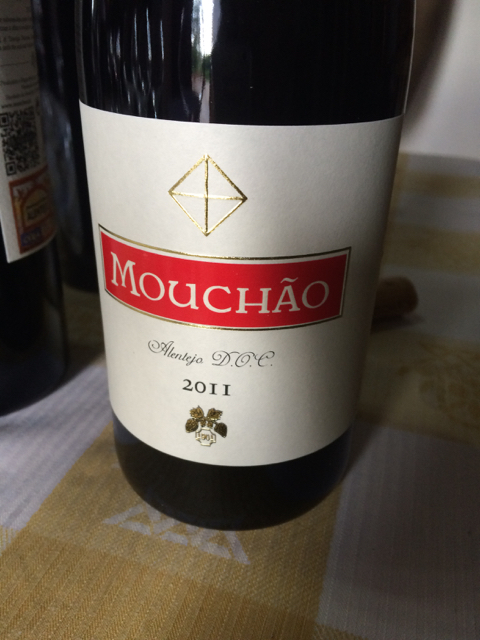
10. Mouchão
Tonel n° 3-4 2011
Mouchão in the Alentejo is one of the great historic estates
of Portugal and Tonel n° 3-4 one of its iconic wines. Unusually Alicante
Bouchet, a teinturier grape, is the star variety here and Tonel is 100% Alicante Bouschet from their Carapetos vineyard. Mid-plum
colour with a warm herbal nose but quite restrained. Delicately textured
initially but marked power and structure soon becomes apparent. Long, quite
tannic finish, needs another four or five years to show its real best.
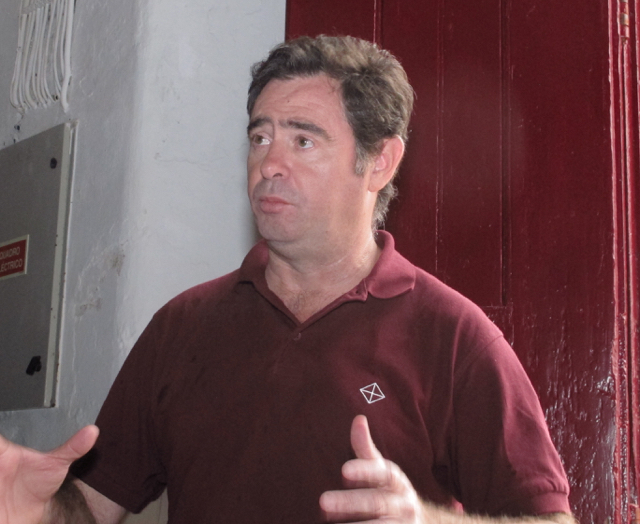
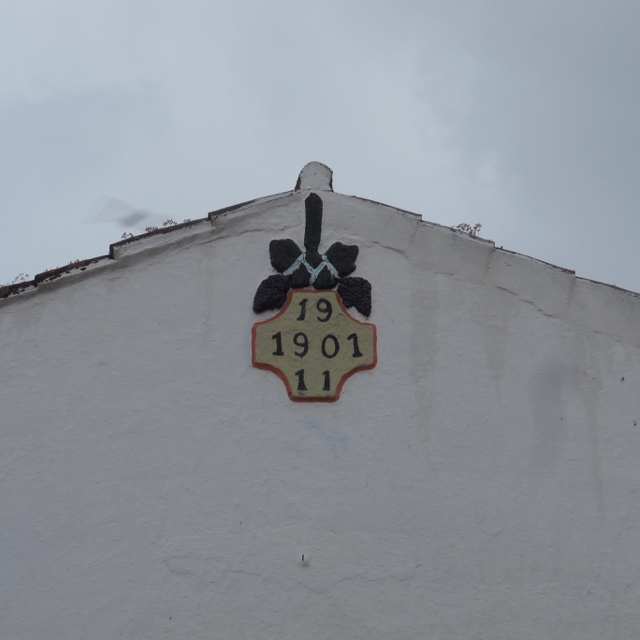
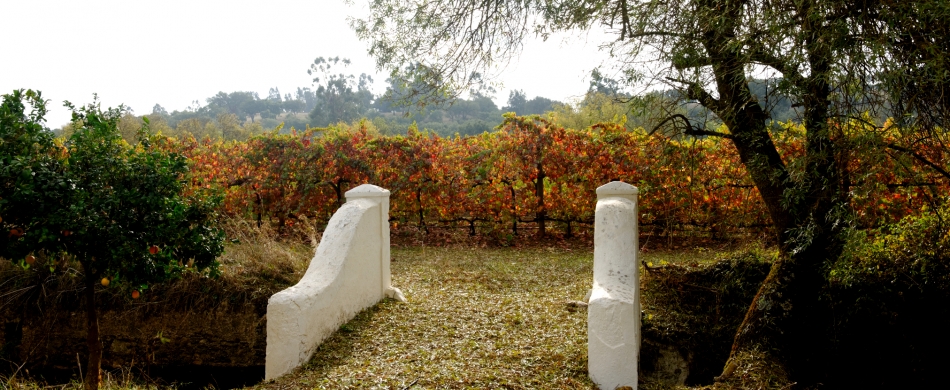
Last July I visited Mouchão. Here is a report on the visit from my Jim’s Loire blog:
Last July I visited Mouchão. Here is a report on the visit from my Jim’s Loire blog:
Website: www.mouchao.pt
11. Quinta da Carvalhais Reserva Tinto 2011
11. Quinta da Carvalhais Reserva Tinto 2011
Carvalhais is a well-known Dão
domaine in the Sogrape group. The Resserva Tinto 2011 has a touch of gaminess
on the nose along with red fruits with opulent seductive mouth-filling texture.
Well structured with some quite marked tannins in the very long powerful finish.
Decant for an hour or so or wait another two or three years. Will be a lovely
bottle.
Website: www.sograpevinhos.com
12. Casa Ferreirinha Quinta da Leda 2014
Casa Ferreirinha is also part of the Sogrape group and is their high quality Douro brand. The winemaker is Luís Sottomayor. The 2014 is a blend of 60% Touriga Franca, 15% Touriga Nacional, 15% Tinto Cão, 10% Tinta Roriz. Still youthful colour, lovely soft texture, structure and some tannins in the long finish. The 2014 has length and power but also delicacy – a fine bottle now but can certainly be kept.
Website: www.sograpevinhos.com
13. Quinta dos Murças VV47 2012.
12. Casa Ferreirinha Quinta da Leda 2014
Casa Ferreirinha is also part of the Sogrape group and is their high quality Douro brand. The winemaker is Luís Sottomayor. The 2014 is a blend of 60% Touriga Franca, 15% Touriga Nacional, 15% Tinto Cão, 10% Tinta Roriz. Still youthful colour, lovely soft texture, structure and some tannins in the long finish. The 2014 has length and power but also delicacy – a fine bottle now but can certainly be kept.
Website: www.sograpevinhos.com
13. Quinta dos Murças VV47 2012.
The
long established Quinta dos Murças in the Douro with 155 hectares of vines
between Regua and Pinhão was bought by Esporão
group in
2008. This wine comes from vines planted in 1947 and is a blend of Touriga Nacional, Touriga Franca, Sousão, Tinta Amarela,
Tinta Barroca and Tinta Roriz. The 2012 is dark, dense, plum coloured with a rich herbal
nose, mouth-filling texture, length. The powerful finish includes the frequent Douro
tannic grip. It can be drunk now especially if decanted but I would look to
keep this for at least another year or two before trying again.
Website: www.esporao.com/pt-pt/sobre/quinta-dos-murcas/
Website: www.esporao.com/pt-pt/sobre/quinta-dos-murcas/

Batuta
by Niepoort – the vertical: 1999 to 2014
Batuta was born in 1999, so we were very privileged through Dirk Niepoort’s generosity in providing this vertical tasting of this Douro wine from 1999 to 2014 with just two vintages not shown – 2002 and 2006.
Batuta comes mainly from north-facing very old vineyards from Quinta do Carril, where the vines are more than 70 years old. Grapes also come from older vines (about 100 years old) near Quinta de Nápoles, the home of the Niepoort Douro winery. Fermentation takes place in cone-shaped stainless steel vats and wooden barrels. Batuta is aged for 22 months in French oak barrels, with 25% new oak.
This vertical tasting again brought to the fore Dirk Niepoort’s signature – the remarkable delicacy and finesse in his wines. Batuta is far removed from some Douro wines that are over-extracted with too much tannin. Some of these Batutas recalled the finesse of good Pinot Noir – little wonder that Dirk is a big fan of Burgundy.
Website: www.niepoort-vinhos.com/
Batuta was born in 1999, so we were very privileged through Dirk Niepoort’s generosity in providing this vertical tasting of this Douro wine from 1999 to 2014 with just two vintages not shown – 2002 and 2006.
Batuta comes mainly from north-facing very old vineyards from Quinta do Carril, where the vines are more than 70 years old. Grapes also come from older vines (about 100 years old) near Quinta de Nápoles, the home of the Niepoort Douro winery. Fermentation takes place in cone-shaped stainless steel vats and wooden barrels. Batuta is aged for 22 months in French oak barrels, with 25% new oak.
This vertical tasting again brought to the fore Dirk Niepoort’s signature – the remarkable delicacy and finesse in his wines. Batuta is far removed from some Douro wines that are over-extracted with too much tannin. Some of these Batutas recalled the finesse of good Pinot Noir – little wonder that Dirk is a big fan of Burgundy.
Website: www.niepoort-vinhos.com/

14. 1999
Lovely
spicy complex nose, complexity on palate, rich but wonderful delicacy, too. Delicious
if perhaps slightly drying in finish. Would consider drinking up any bottles
fairly soon.
15. 2000
15. 2000
Spicy
nose a little less opulent than the 1999. Again delicacy, which is a touchstone
of the Niepoort reds, is showing here. Has a resemblance to the sexy
seductiveness of a fine Pinot Noir. A star.
16. 2001 (magnum)
16. 2001 (magnum)
Once
more the warm, spicy signature aroma. Less opulent than 2000 and 1999.
A
leaner colder vintage or is this an effect of this coming from a magnum?
Tannins showing in finish but would be masked by food.
17. 2003
17. 2003
Mid
plum, a little bricky at the edge, seductive mouth-feel and texture, rich wine,
sweet fruit runs through. Opulent and very seductive but there is always that
impressive delicacy – these Batutas are not Douro brutes!
18. 2004 (magnum)
18. 2004 (magnum)
Mid
plum, red fruits, spicy nose, lovely delicate texture, length, some tannins
showing in finish but ripe and well integrated. Lot of charm.

19. 2005 (magnum)
Still youthful mid-plum colour, spicy red fruits nose, sweet texture, structure in finish, complexity and length. Integrated tannins in finish. Lovely wine.
20. 2007 (magnum)
Still youthful mid-plum colour, spicy red fruits nose, sweet texture, structure in finish, complexity and length. Integrated tannins in finish. Lovely wine.
20. 2007 (magnum)
Mid
plum, delicate red fruits nose, delicacy not a heavyweight, has balanced thread
that runs through. Finesse over power.
21. 2008
21. 2008
Youthful
mid-plum colour, red and black fruit aromas. The spicy notes of the older wines
have been replaced here by an emphasis on fruit. Power, length and finesse.
22. 2009
22. 2009
Mid
plum, opulent spicy nose – return of the spice! Mouth-filling texture, lovely
delicate but enveloping texture. Excellent length and great balance. Lovely
wine. Drink now or keep.
23. 2010
23. 2010
Mid-plum,
quite dense colour. Seductive red fruits nose, again lovely texture, rich,
quite marked tannins and structure. Can be drunk with pleasure now but will
certainly keep for a number of years.
24. 2011
24. 2011
Mid
to dark plum, some spicy texture, red fruits, touch of dried mushrooms, length,
power but delicacy too.
25. 2012
25. 2012
Mid
plum colour, warm red fruit aromas, cherries, texture leaner more restrained
and without the same opulence as the 2011 and with grainier tannins.
26. 2013
26. 2013
Mid
plum, some faint wood notes, lovely red fruits, sweet texture, very good
seamless balance and length. Can be enjoyed now but certainly can be kept for
at least five years or more as this vertical clearly demonstrates.
27. 2014
27. 2014
Mid-plum
youthful, violets, quite floral aromas, youthful and vibrant, delicate but
tight in finish with fresh fruit flavours of a young wine. Well-integrated
tannins. Mid-weight. Fine potential.

Ports
I
increasingly find tawny and colheita Ports more interesting and complex than
Vintage, unless it is very mature and the spirit has become fully integrated
and sweetness calmed. There were some lovely Ports here.
28. Quinta do Noval Vintage 1994
One of the most iconic Douro Port estates sited above Pinhão in the Upper Douro bought by AXA Millésimes in 1993. Spicy cherry nose. Spirit shows a little but some attractive cherry flavours. Length and power. The 94 needs more time with some spirit still showing through in the finish.
Website: www.quintadonoval.com
29. Noval Colheita 1976
Walnut colour, nutty austerity, quite austere texture and power. Touch of appealing harshness with great length – great. This is very fine and although admittedly it is 18 years older than the Vintage tasted above it reinforces my feeling that Colheitas tend to be more interesting and complex than Vintage Ports.
Website: www.quintadonoval.com
30. Calém Colheita 1961
Calém along with Barros, Burmester and Kopke are now part of the Sogevinus group.
The 1961 has a delicate mid-gold colour with aromas and flavours of nuts and dried herbs, good concentration along with lovely finesse too. An excellent and delicious Port.
Website: www.calem.pt
28. Quinta do Noval Vintage 1994
One of the most iconic Douro Port estates sited above Pinhão in the Upper Douro bought by AXA Millésimes in 1993. Spicy cherry nose. Spirit shows a little but some attractive cherry flavours. Length and power. The 94 needs more time with some spirit still showing through in the finish.
Website: www.quintadonoval.com
29. Noval Colheita 1976
Walnut colour, nutty austerity, quite austere texture and power. Touch of appealing harshness with great length – great. This is very fine and although admittedly it is 18 years older than the Vintage tasted above it reinforces my feeling that Colheitas tend to be more interesting and complex than Vintage Ports.
Website: www.quintadonoval.com
30. Calém Colheita 1961
Calém along with Barros, Burmester and Kopke are now part of the Sogevinus group.
The 1961 has a delicate mid-gold colour with aromas and flavours of nuts and dried herbs, good concentration along with lovely finesse too. An excellent and delicious Port.
Website: www.calem.pt
31. Burmester Colheita 1952
Burmester along with Barros, Calém and Kopke are now part of the Sogevinus group.
Burmester along with Barros, Calém and Kopke are now part of the Sogevinus group.
Mid burnished gold, still rich dried fruit – apricots and sultanas, great finesse and delicacy, length. A glass to sip and enjoy at the end of a good meal. Lovely!
Website: www.burmester.pt

32. Kopke Colheita 1957
Kopke along with Barros, Burmester and Calém are now part of the Sogevinus group.
Kopke along with Barros, Burmester and Calém are now part of the Sogevinus group.
Mid
to deep burnished gold, sweet raisined fruit, a little touch of alcohol, quite
austere finish providing an interesting contrast to the residual sweetness.
Very long finish.
Website: www.sogevinus.com/kopke/
Website: www.sogevinus.com/kopke/
33. Real Companhia Velha 1938
The first of the two pre-Second World War Ports, this comes from old vines at Quinta das Carvalhas in the Upper Douro on the south bank of the river. Mid gold colour, still quite sweet dried fruits on palate. While attractive the 1938 doesn't have the complexity and finesse of some of the other Colheitas here.
Website: www.realcompanhiavelha.pt
The first of the two pre-Second World War Ports, this comes from old vines at Quinta das Carvalhas in the Upper Douro on the south bank of the river. Mid gold colour, still quite sweet dried fruits on palate. While attractive the 1938 doesn't have the complexity and finesse of some of the other Colheitas here.
Website: www.realcompanhiavelha.pt

34. Niepoort Colheita 1934
Deep burnished walnut colour, concentration of sweet dried fruits, apricots and raisins allied with lovely austerity. Very long, complex finish. This has that fantastic combination of fruit and almost painful austerity that I love in old fortified wines whether they are Ports, Jerez or Madeira.
Deep burnished walnut colour, concentration of sweet dried fruits, apricots and raisins allied with lovely austerity. Very long, complex finish. This has that fantastic combination of fruit and almost painful austerity that I love in old fortified wines whether they are Ports, Jerez or Madeira.
Truly
stunning – great wine!
Website: www.niepoort-vinhos.com/
Website: www.niepoort-vinhos.com/