With the two natural wine fairs in London next weekend Michael Spatt and Mark Feldman of Destiny Bay Vineyards on Waiheke Island, near Auckland, New Zealand have shown impeccable timing over the launch of their new book – Grape–A-Hol: how big business is subverting artisan winemaking and the future of fine wine.
Spratt and Feldman launch broadsides against a number of targets but the central one is big business – large producers, large distributors and large retailers. They dub large brands as Grape-a-hol – 'alcoholic
beverage made from fermented grape juice and passed off as a substitute
for fine wine. Origin 2012, from grape + ethyl alcohol' – and fine artisan
wine is defined as:
They characterise large corporations as 'stubbornly' adhering to 'low-cost and low-price models that ignore differentiators like quality and distinctiveness that might legitimately deliver price premiums and growth in sales volume. Instead they ride the commodity-product slide until sales drop off and then repackage their product as another market-tested label for another run. Their primary objective is to produce commodity quality consistent with the lowest possible cost.'
Spratt and Feldman recount how they asked a 'well-known winemaker from a medium-sized producer' that had recently been bought by one of the world's largest wine business what had changed after the acquisition:
"Before we were acquired, we were always looking for ways to earn a dollar more for our wines. After the deal was done, everything switched to how could we save ten cents on making the wine."
The authors comment: 'When a larger corporation takes over a smaller winery, short-sighted financial and brand management is quickly applied and devolves to the lowest common denominator. Decades of work building a quality artisan brand can be undermined in a matter of months."
"...and unfortunately we have to pay SOMETHING for the actual wine."
They attack the move to ship an increasing amount of New Zealand Sauvignon Blanc in bulk. They show that wine is the best option compared to beer or ready to drink beverages if you are looking to get drunk cheaply:
'..if you are a cost conscious young drinker, and you don't want to spend half the night in line for the toilet, Grape-a-hol is your best bet by a margin of more than 2 to 1 on both price and surplus fluid disposal requirements.'
They castigate Governments, who tax alcohol excessively, for benefitting from high levels of consumption as well as the drinks industry's meaningless 'responsible drinking initiatives' when it is the industry's fault that drink is so cheap. Instead they advocate minimum pricing of alcoholic beverages.
Other targets include wine competitions, biodynamics and wine writers, who recommend grape-a-hol products. They do, however, believe that social media and on-line blogs can be a force for helping to save artisan wine production.
'Fortunately, information sharing is being reinvented and democratized via online blogs and social media. The ability of beverage conglomerates to control the narrative through marketing muscle and advertising dollars is diminishing. Social media and word-of-mouth are fast becoming the dominant currency of message credibility.' In conclusion they recommend the Waiheke Certified Wine program as a way of protecting artisan wine production. There are three main criteria if a wine is to be labelled 'Waiheke': 'it must be made with 100% Waiheke Island-grown fruit, be part of a certified sustainable grape-growing program, and have been independently verified as free from standard wine faults'.
This is certainly a recommended and thought provoking read. Good to have a polemic with the natural/authentic/artisan wine fairs coming up plus the London International Wine Trade Fair.
Grape-A-Hol is published by dog ear publishing: Print version £10.26 from Amazon or £5.06 downloaded for Kindle.

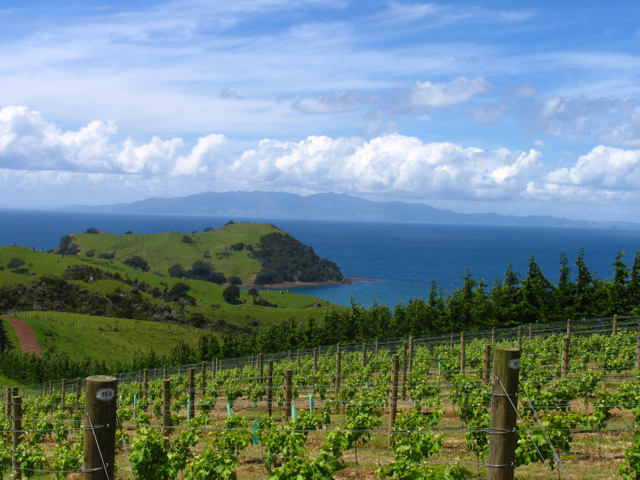
Vineyards on Waiheke Island
Selected from the press release:
With the publication of this book, the authors,
Destiny Bay Vineyards’ founder Michael F. Spratt and Destiny Bay Wine Imports
owner, Mark L. Feldman, have raised issues and exposed practices that many in
the industry would prefer remain buried and out of public view.
“Some within the large wine companies will not be happy with this book,” said
Spratt. “But we feel it is long past time to expose the questionable practices
and regulatory myopia that are subverting artisan wine making, altering
consumer tastes, and sabotaging the future of fine wine.”
Nearly 30 billion liters of wine are produced every year. But how much is truly
fine wine? “Vastly less than what is claimed to be,” said Spratt. “Coining the
term ‘Grape-a-hol’ and defining it as an alcoholic beverage made from fermented
grape juice and passed off as a substitute for fine wine was the starting point
for our argument about how the line between fine wine and bulk wine has become
dangerously blurred.”
“Grape variety, vintage, place of origin, and sorting fruit for quality are
largely irrelevant when pushing millions of cases of wine into a mass market,”
stated Feldman. “Instead, labels, advertising hype, marketing promotions, shelf
space, relative pricing, volume and manipulation of the distribution system are
paramount. Wine industry economics are being altered and a 6,000-year-old craft
is being undermined. “
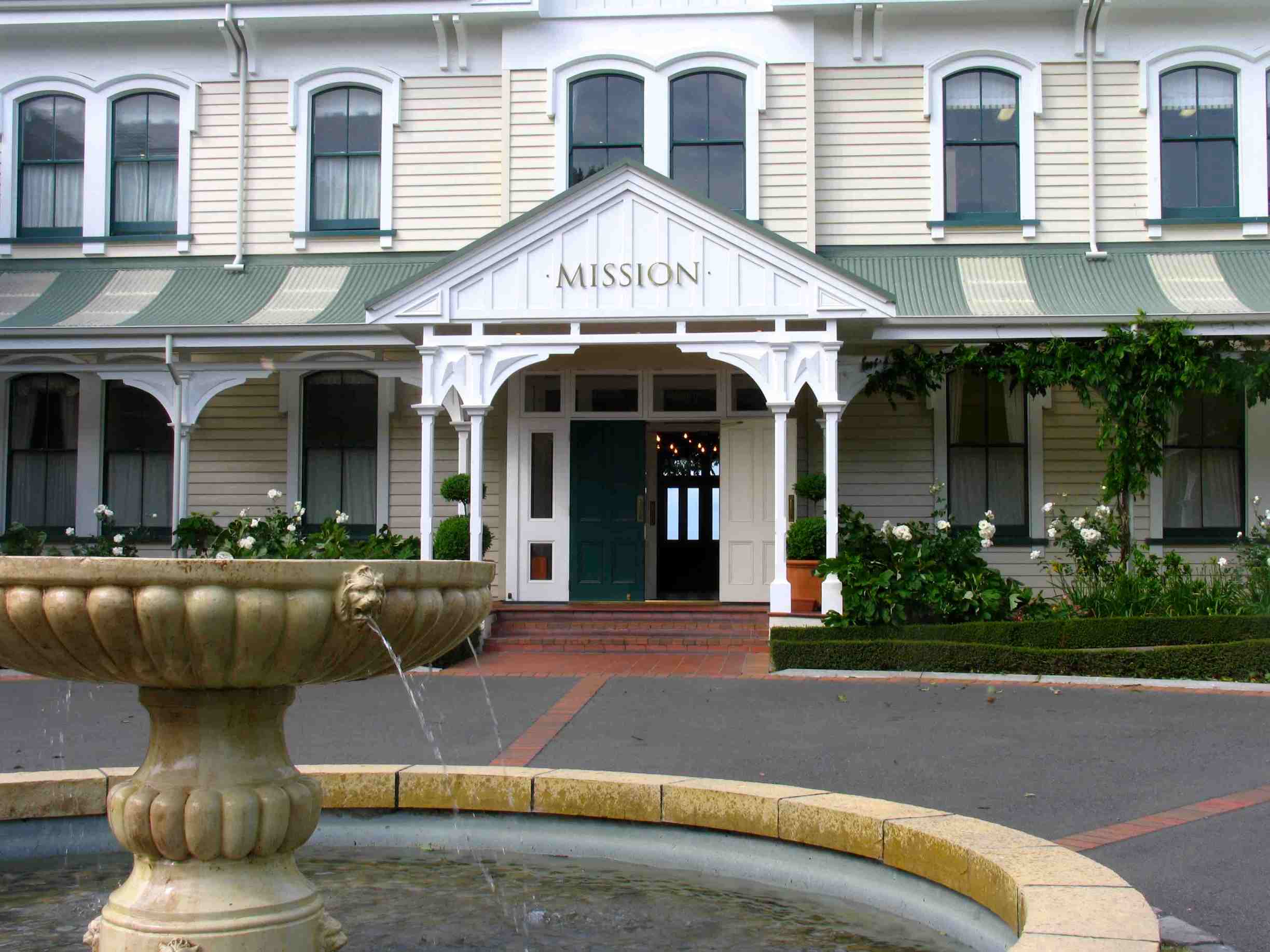 Historic Mission Estate, Hawkes Bay
 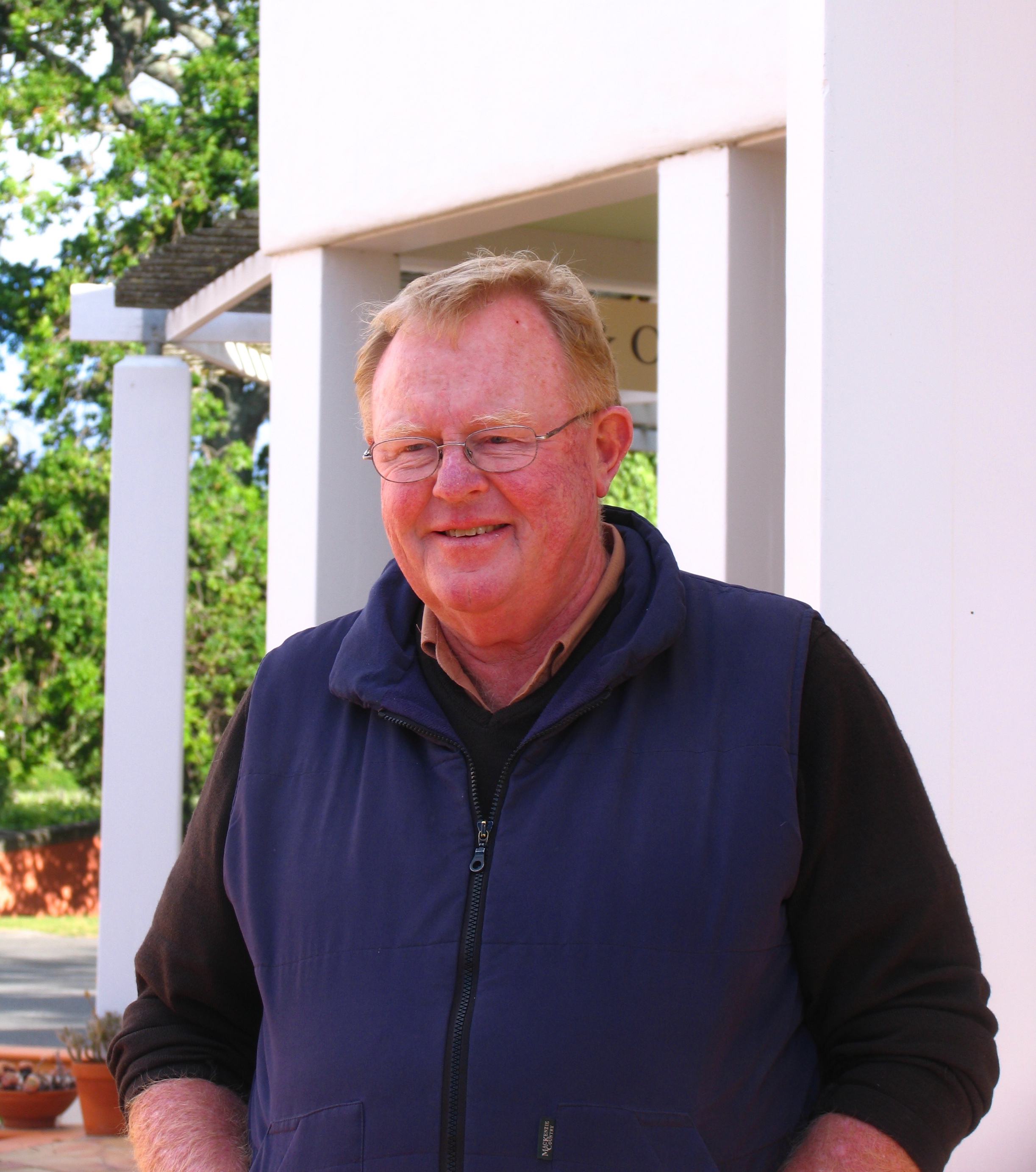 John Buck, Te Mata, Hawkes Bay
 A Hawkes Bay vineyard
 John Hancock, Trinity Hill, Hawkes Bay

 James and Annie Millton, Millton Vineyard, Gisborne


