Awards and citations:


1997: Le Prix du Champagne Lanson Noble Cuvée Award for investigations into Champagne for the Millennium investment scams

2001: Le Prix Champagne Lanson Ivory Award for investdrinks.org

2011: Vindic d'Or MMXI – 'Meilleur blog anti-1855'

2011: Robert M. Parker, Jnr: ‘This blogger...’:

2012: Born Digital Wine Awards: No Pay No Jay – best investigative wine story

2012: International Wine Challenge – Personality of the Year Award


Showing posts with label Belargus. Show all posts

Thursday, 21 February 2019

Is Quarts de Chaume about to become very rare?

Cartographie Chaume et Quarts-de-Chaume sans géols

Green is Chaume 1er Cru and pink is Quarts de Chaume

Two new and wonderfully detailed maps of the Quarts de Chaume
and Coteaux du Layon 1er Cru Chaume
Source: Fédération Viticole Anjou-Saumur 

Cartographie Chaume et Quarts-de-Chaume avec géols
Geological map of Coteaux du Layon 1er Cru Chaume
Clearly indicating how complex the soils are in this small area

2019 is a significant year for Quarts de Chaume – one of the world's greatest expressions of Chenin Blanc. It will be the last vintage that cryoextraction, or cryoselection as some prefer to call it, will be allowed under the décret of November 2011. This transitional arrangement comes to an end in 2019. From 2020 it will hopefully be impossible to make Quarts de Chaume from unripe, green grapes and foist it onto the consumer as the real thing.

However, despite a series of good to excellent vintages there is every prospect that Quarts de Chaume, already a small appellation of 40 hectares, will become increasingly rare. The problem is simple we are not buying and drinking enough sweet wine. Now there is a marked move to making dry Anjou Blanc from the vines of the Quarts de Chaume.

QuartsdeC+hamlets
Hamlet of Chaume and the surrounding Q de C vines 

The arrival of two important new players – Kathleen Van den Berghe and Sigurd Mareels (Château Suronde) and Ivan Massonnat (Domaine Belargus) – has highlighted the problem and the direction that a significant proportion of the production from vines in the Quarts de Chaume will take. Belargus has 10 hectares of vines in Quarts de Chaume and Suronde 5.5 hectares making a total of 15.5 ha or 38.75% of the appellation's total area.   
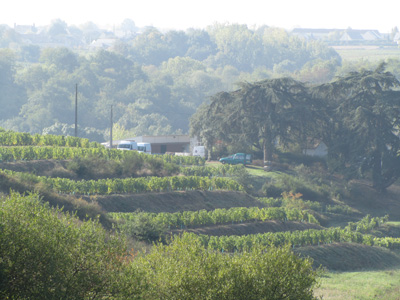
Surondes
View towards Suronde

Suronde's website clearly sets out their wine producing policy.

'Château de Suronde is the perfect complement to Château de Minière (Bourgueil), with white wines from Chenin Blanc that can be sweet, semi-sweet and dry, both still and sparkling. Château de Suronde will produce mainly dry white wine, and will produce the iconic sweet Quarts de Chaume wines in the best vintages only.'

Only sweet wines that meet the appellation's criteria can be Quarts de Chaume – dry, semi-sweet will be Anjou Blanc, while the sparkling can be either Anjou Mousseux or Crémant de Loire depending on the production methods used.

Ivan Massonnat (Belargus) intends to make 80% dry wines from his 10 hectares. This percentage is likely to be even higher in average to poor vintages. It was Jo Pithon who fortunately persuaded Massonnat to make some Quarts de Chaume in 2018. Pithon pointed out that even though sweet wines are difficult to sell they can remain in a grower's cellar for many years without losing value.

E part of IM QdeC
Part of Belargus's holding in lieux-dit Les Quarts

Suronde and Belargus are not alone. Guy Rochais (Château de Plaisance) is also making  dry wines in the Quarts de Chaume and is amongst those pushing for a superior appellation for the best of Anjou Blanc sec – in this case, perhaps, Anjou Blanc Chaume.

What of Domaine des Baumard's six hectares of Quarts de Chaume? From the 2020 vintage when cryo-extraction is banned making it impossible for the domaine to make some 80 hectolitres of ersatz 'Quarts de Chaume' as they did in the awful 2012 vintage when over 200 mls of rain fell during the crucial month of October.  

Actually it was legally impossible in the 2012 vintage but the INAO chose to turn a blind eye – forget any notion that this organisation stands up for the consumer. In less than ideal vintages will Domaine des Baumard now choose make a proportion of dry white from their six hectares?

My guess is that producers, like Domaines de la Bergerie, Ogereau and others with just a small parcel in the Quarts de Chaume will continue to try to make 100% sweet wine from their parcels unless weather conditions make this impossible.

Stats from InterLoire show that between 2012 and 2016 the maximum area declared as Quarts de Chaume was 35 hectares (2014), while the lowest was 6 hectares in 2012......  Will the area declared reach 35 hectares in the near future?

It is difficult to blame the producers for choosing to reduce their production of sweet wine in favour of dry ones. How can you expect them to go on making wines that in order to be great require tiny yields, with the attendant big risks of late harvest and the additional expense of successive pickings, if they cannot sell them no matter how good these sweet wines are?

This development sets lovers of a sweet wine a challenge. If you want these wines to continue to be made in reasonable quantities you must be prepared to drink more of them. Here I am as guilty as anyone. I love sweet wines, especially those from the Loire with their magical balance of sweetness and acidity. However, when I reflect at the end of the year on the number of bottles of sweet wines that I have drunk – I may only need the fingers of one hand and only rarely more than two!

This lack of consumption is not peculiar to Quarts de Chaume or other Loire sweet wines, Sauternes and other great sweet wines face similar problems in a dry white market. Some would say let market forces rule. If a type of wine is difficult to sell them what's the problem if it disappears.... Although, of course, market forces are necessarily a major influence, if it wasn't for some stubborn and courageous producers some of wine's diversity would have been lost. The wine world would be a a sea of international wine varieties. The marvels of good sherry might well have disappeared. etc. etc. 

It is still possible to enjoy and marvel at sweet Vourvays or those from the Layon from 1947 because a reasonable quantity was made. Will that still be the case for potential great vintages like 2018 and those to come in the future in 70 years time? For the sake of future generations of wine lovers I hope so! 

As wine communicators we need to highlight the qualities of great sweet wine and the different occasions to drink them. It doesn't help that too many in the British wine and hospitality trade and in other countries foolishly and inaccurately describe these magical wines as 'dessert' wines.


JB-QuartsdeChaume_0001

Un Grand Vin du Monde – Quarts de Chaume by Jean Baumard

I don't often agree with Jean Baumard but I do agree with his book's title Quarts de Chaume – Un Grand Vin du Monde (published 2007) – assuming that the wine complies with the décret in force from the 2020 vintage. Unfortunately Quarts de Chaume is facing some testing times and is under a possible threat, which I hope will receive some airtime during the International Chenin Blanc Seminar at the start of July in Angers.

Monday, 7 January 2019

Bel avenir pour Belargus ?

 
Ivan Massonnat, owner of the new Domaine Belargus*
Was initially called Bel Argus (2 words) now Belargus (one word) 


Last Thursday (3rd January) we had a very useful and interesting journey and visit to meet Ivan Massonnat at the winery of Pithon-Paillé in Saint-Lambert-du-Lattay. During last year Ivan bought Jo Pithon's vineyards, Pascal Laffourcade's ten hectares of Quarts de Chaume and nearly three hectares in Savennières – creating his new Domaine Bel Argus, which I think is an exciting project for both Anjou and for Loire Chenin Blanc, the new domaine's sole focus.

We met Ivan and his new winemaker 24-year-old Adrien Moreau. Ivan explained how the new venture had come about.

"It had been intended that Jules, Jo Pithon's son and his partner Tania, would take over Pithon-Paillé. However, Jules and Tania separated and Jules decided against taking over. Jo and Isabelle, Jo's wife, decided to sell as they were ready to retire. Because of the frosts 2016 and 2017 had been difficult for Jo."

For a number of years Ivan has had a house in Champigny-sur-Veude to the south of Chinon. "For a long time I have been looking to buy a domaine in Anjou. I am particularly interested in single varietal wines and am a lover of those from Burgundy and have a passion for Chenin Blanc. I have often spoken with Patrick Baudouin. Last February I was with Patrick at the Salon des Vins de Loire. He told me that Jo Pithon's  estate was up for sale. I had never heard of Jo."

Patrick took Ivan to meet Jo at the Salon and early next day he was with Jo visiting the steeply sloping Clos des Treilles. There were a few others interested in acquiring Jo's domaine but Ivan soon emerged as the front-runner and the deal was completed on 6th June. Ivan explained that the Clos is not in the best state with some vines missing. The financial restraints imposed by the two successive years of frost would have made it difficult to do all the necessary replacements. 

excess bunches 
Generous 2018 crop @l’Echarderie

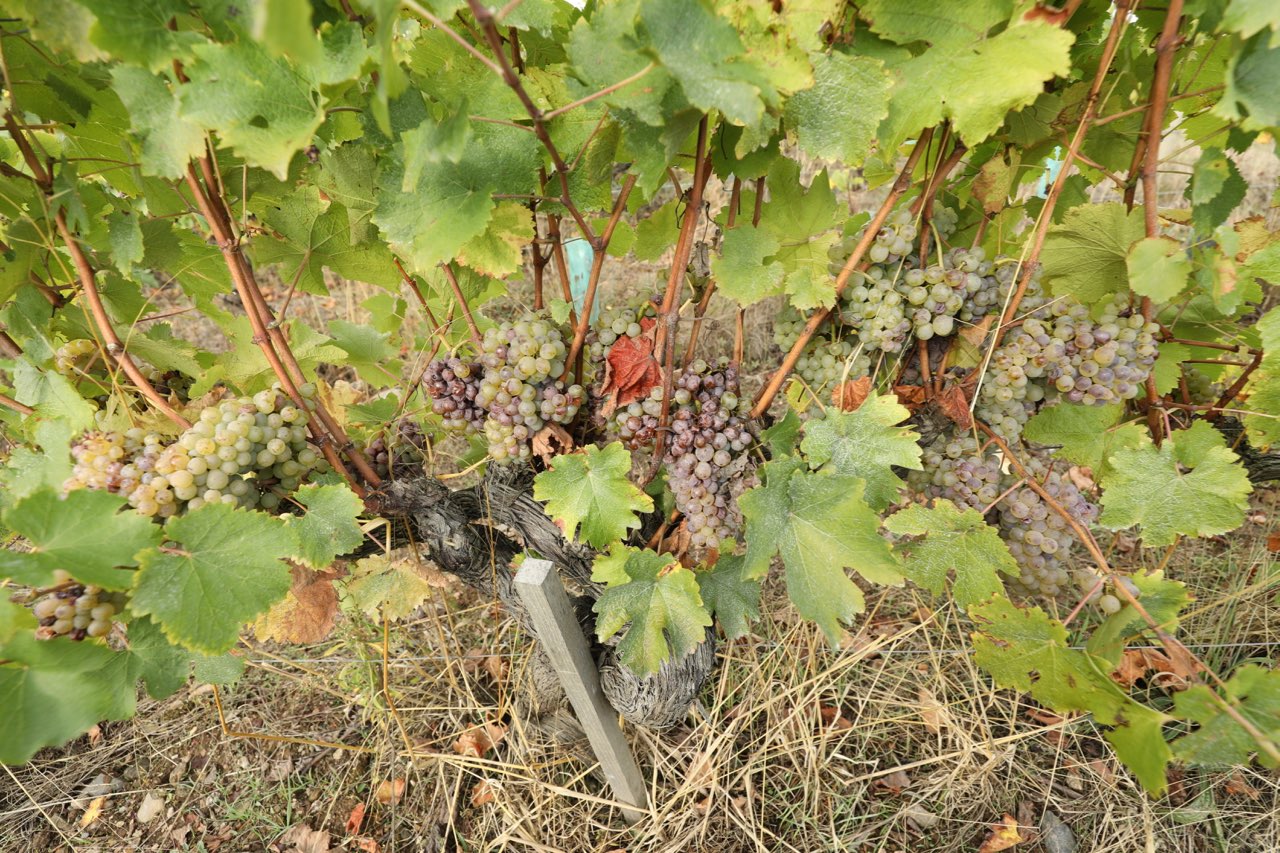
At the same time Ivan bought Pascal Laffourcade's ten hectares in the Quarts de Chaume Grand Cru. These ten hectares are in one sole block around Pascal's Château de l’Echarderie. This represents a quarter of the appellation. I mentioned that I had been been walking in the Quarts de Chaume in October last year and had noted that the vines around l'Echarderie were carrying a considerable crop. "We made mostly dry wines from these grapes," said Ivan.  

More recently Ivan has bought nearly three hectares in Savennières adjacent to the Roche aux Moines. This brings his new domaine up to 26 hectares. 

adrien moreau
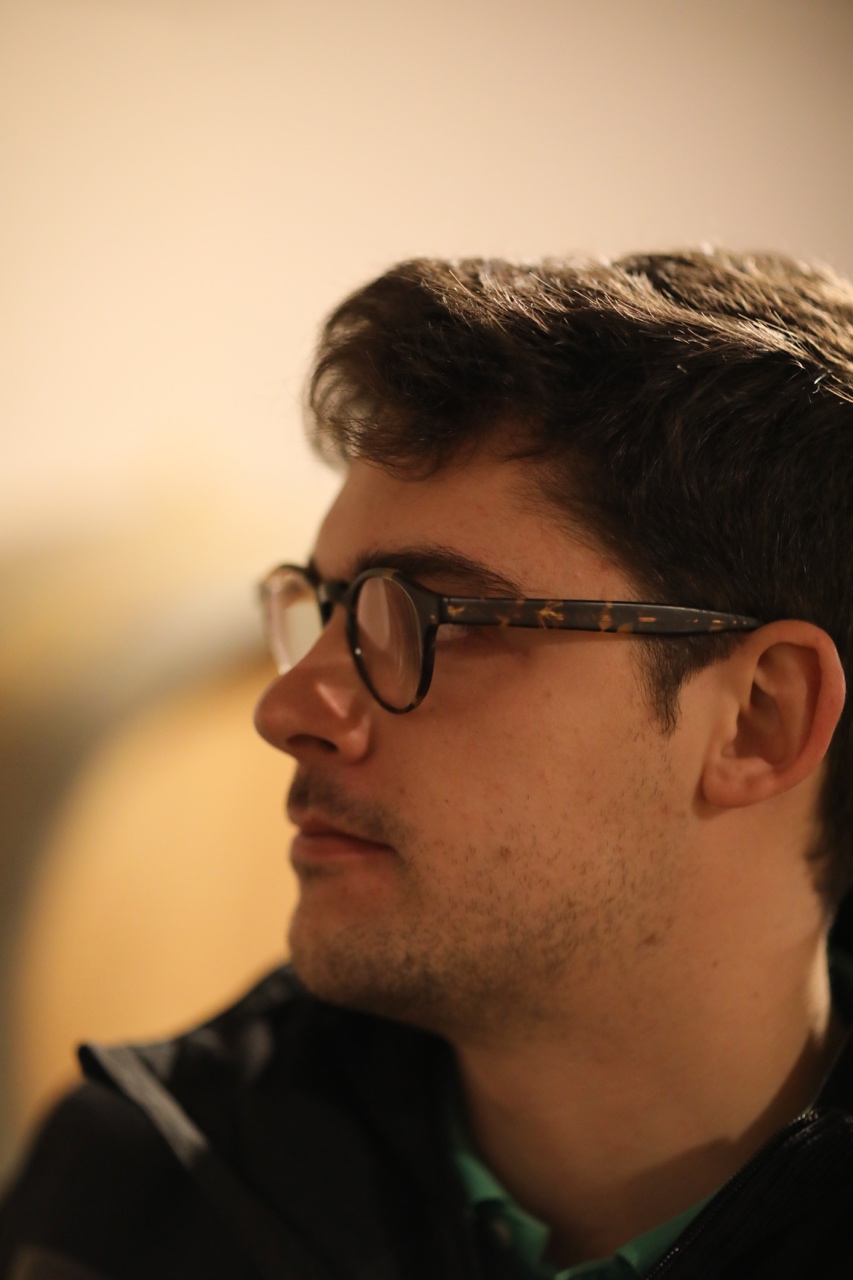
 Adrien Moreau

Ivan encouraged Adrien, the young wine-maker, to introduce himself. 

"I joined in October for the end of the harvest." Adrien said. "I come from the Beauce and my parents are cereal farmers.  I studied wine-making at Paris and Montpellier along with spells at Cheval Blanc, Haut-Brion and Harlan Estate in the Napa Valley. In April 2018 I joined Roederer in Champagne and was there for the harvest, which was exceptional. I was very interested by the Roederer's vine collection and especially the work on Pinot Noir sélection massale,"

adrien moreaua

"What I like about Adrien," added Ivan, "is that he is more than a technician. Adrien is passionate about wine, a good taster and very keen to learn."

"2019 will be a year of reflection," explained Ivan. "This is a collective adventure – it is not about my ego. Anjou is not well known. Wine amateurs are becoming aware that Anjou has some grand terroirs." Ivan is keen that the general wine drinking public discover Anjou's potential. The current winery in Saint-Lambert will be considerably improved. It hasn't been decided whether to demolish the old building and start again. Possibly they may decide to build a new winery elsewhere.

Other details of Domaine Belargus were covered in an earlier post here.   

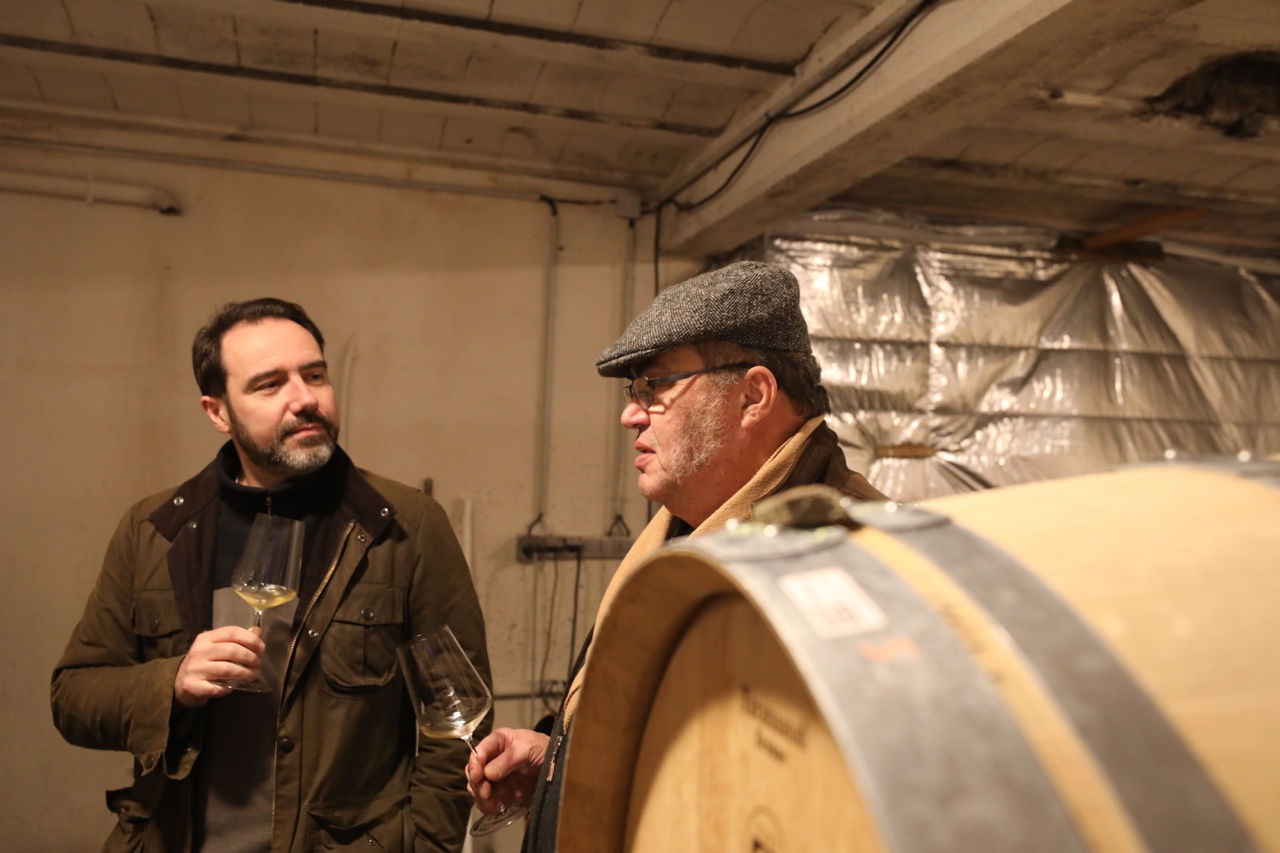
After introducing the project we went down into the cellar to taste the 2018 Chenins from barrel. Covering dry wines from Savennières, Les Bonnes Blanches (Saint-Lambert-du-Lattay), dry Chenin made in the Quarts de Chaume and Les Treilles. We finished with the sweet wines – delicacy and finesse from Belargus, Les Treilles (tiny production), 1er Cru Chaume Coteaux du Layon, and two parcels in the Quarts de Chaume – Les Rovers et Les Quarts with the latter currently more expressive. Ambroisie (35.5˚ potential) from Quarts de Chaume set us up for our return to the Cher Valley.  These wines are all still babies but 2018 looks very promising, very precise and well balanced. 

jo pithon
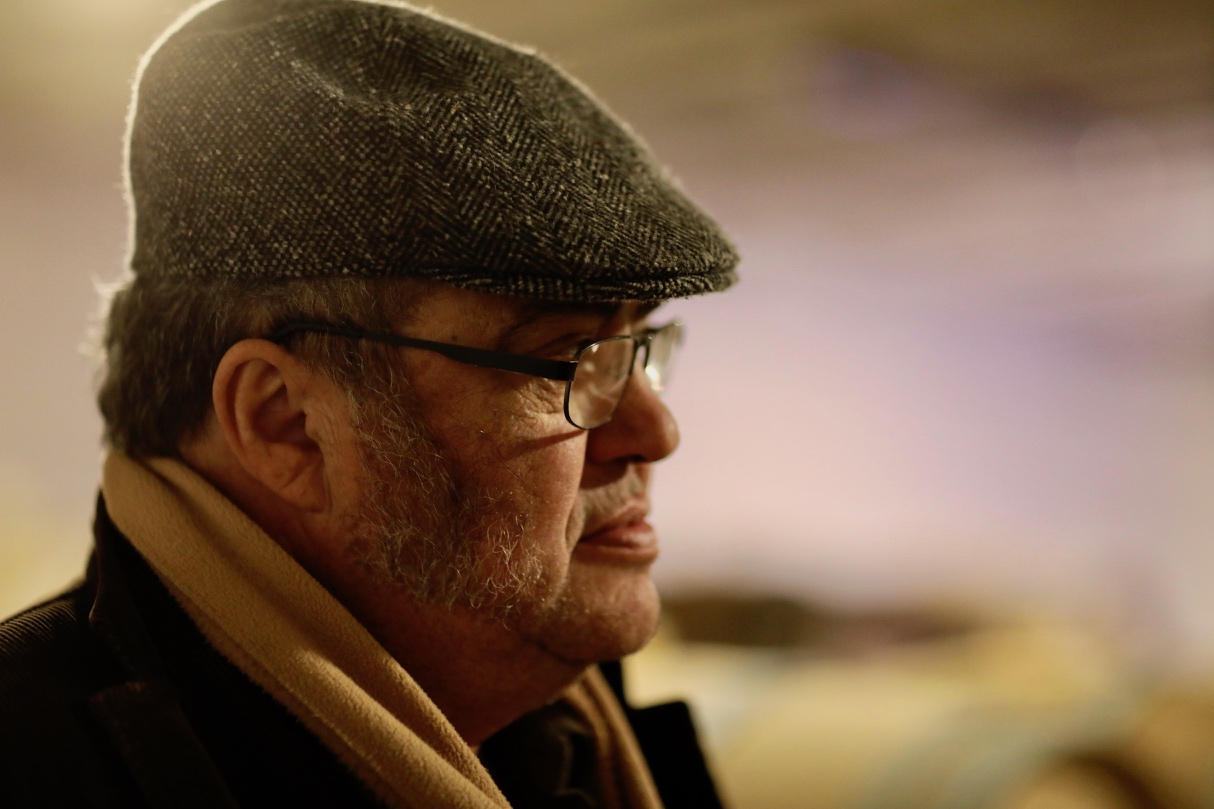
 Jo Pithon

Jo Pithon joined us part of the way through the tasting. He looked very relaxed – retirement is clearly suiting him!  It was also apparent that he and Ivan have a mutual respect. 

ivan and jo
Ivan and Jo

Suffice to say that I was very impressed by Ivan and his Chenin Blanc project. Ivan stressed that this is very much a nine-strong team of mixed ages from Adrien in his early twenties to Jo at retirement and Guy Bossard, as the consultant for helping the entire domaine to become biodynamic. Interesting and encouraging that Ivan has persuaded Guy to take Belargus on as his only consultancy, choosing someone who knows the Loire intimately and not plumping for a 'stellar' consultant from Bordeaux or elsewhere and who already advises a large clutch of domaines.

After the harvest all of the team piled into mini-bus and headed to Côte Rotie where they visited a number of vignerons that Jo knows well. In addition to this team building Ivan stressed that they all meet regularly and that everyone is kept informed about what is happening in all aspects of the domaine. 

Jo's last business partner – Philip Fournier (Now Domaine FL) turned out to be a distressing disaster. I hope and think it very likely that that this new project will work much better and Jo will see his work, particularly on the Clos des Treilles, carried on and taken to the next level.

I asked Jo how this new partnership compared to his previous business arrangement. Diametrically different was the response...... 
  
trio 
Ivan, Jo and Adrien