Awards and citations:


1997: Le Prix du Champagne Lanson Noble Cuvée Award for investigations into Champagne for the Millennium investment scams

2001: Le Prix Champagne Lanson Ivory Award for investdrinks.org

2011: Vindic d'Or MMXI – 'Meilleur blog anti-1855'

2011: Robert M. Parker, Jnr: ‘This blogger...’:

2012: Born Digital Wine Awards: No Pay No Jay – best investigative wine story

2012: International Wine Challenge – Personality of the Year Award


Showing posts with label Chenin Blanc. Show all posts

Saturday, 1 February 2020

Château de Plaisance (Chaume et Quarts de Chaume) under new ownership


Vanessa Cherruau, Vigneronne coproprietaire

It was good to meet Vanessa Cherruau again. I had met her a number of years ago when she was employed at the ill-fated Château de la Genaiserie (Saint-Aubin-de-Luigné). She left Genaiserie when they ceased to pay her before the domaine collapsed first into administration (2010) and then into liquidation in 2013. 

Last year Vanessa put together a group of investors along with herself to buy the 25-hectare Château de Plaisance from Guy Rochais, whose father Henri had acquired the domaine in 1960. Since 1995 it has been farmed organically and is now biodynamic. 

Plaisance has 25 hectares of vines spread across 44 parcels in the following appellations Anjou Blanc, Savennières, Chaume and Quart de Chaume. The bulk of the vines are in Chaume with 1.5 ha in Quarts de Chaume and three hectares in Savennières around the Moulin de Gué. There are 21 hectares of Chenin, 2.5 hectares of Cabernet Sauvignon and the same area of Cabernet Franc planted as well as a small amount of Chardonnay. The average of the vines is 40 years old with some vines more than 120 years old. Picking is all by hand. 

Guy Rochais was one of the leaders of the move to make high quality dry white wine in both Chaume and Quarts de Chaume and to campaign for cru status for this dry wine. This move is partly driven by how difficult it is now to sell substantial volumes of sweet wine even from a potentially top quality appellation like Quarts de Chaume. Guy also considered that the terroir of both Chaume and Quarts de Chaume had the potential to make great dry Chenin. For several years Guy has been looking to sell up and retire. 

A duo of Savennières – 2018 and 2019

Vanessa is understandably excited by this new project, which was concluded literally hours before the 2019 harvest started. The documents were finally signed at the notaire (lawyer) at 10pm on 12th September and picking Chardonnay started the following morning at 9am! Furthermore, Vanessa was expecting a baby at any moment.

There will be a continued emphasis on dry Anjou Blanc from the Chaume vineyards. I tasted the 2019 from the Butte de Chaume, which was harvested on 18th September. "Our aim is to make a very precise and clean dry wine using no botytised grapes, so picking earlier than was Guy's practice," Vanessa explained. 

In 2019 Plaisance's vines in Savennières were frosted both in April and early May and recorded an 80% loss of crop. I tasted the 2019 Savennières, which while unfinished is attractively vibrant and with potential. It is clearly a step up from the 2018 Savennières, which is pleasant enough but not special. Clearly by 2018 Guy wanted out and Vanessa explained that most of the domaine's 2018 was sold off to négociants.  

It is good to see another new project in Chaume and Quarts de Chaume joining the recently established Domaine Belargus.       


Vanessa pouring Plaisance's Quarts de Chaume

Tuesday, 8 October 2019

Loire 2019 – Saumur, Saint-Nicolas-de-Bourgueil and Bourgueil


Picking La Butte
Picking @Domaine de la Butte, Bourgueil

Some photos and reports from harvest in Saumur, Saint-Nicolas-de-Bourgueil and Bourgueil on 3rd October.


CF-Montée de l'Angle Cher
2019 Cabernet Franc in vineyard along Montée de l'Angle Cher, Saumur 
Above and below
(Saumur-Chempigny)

CF - Montée de l'A 
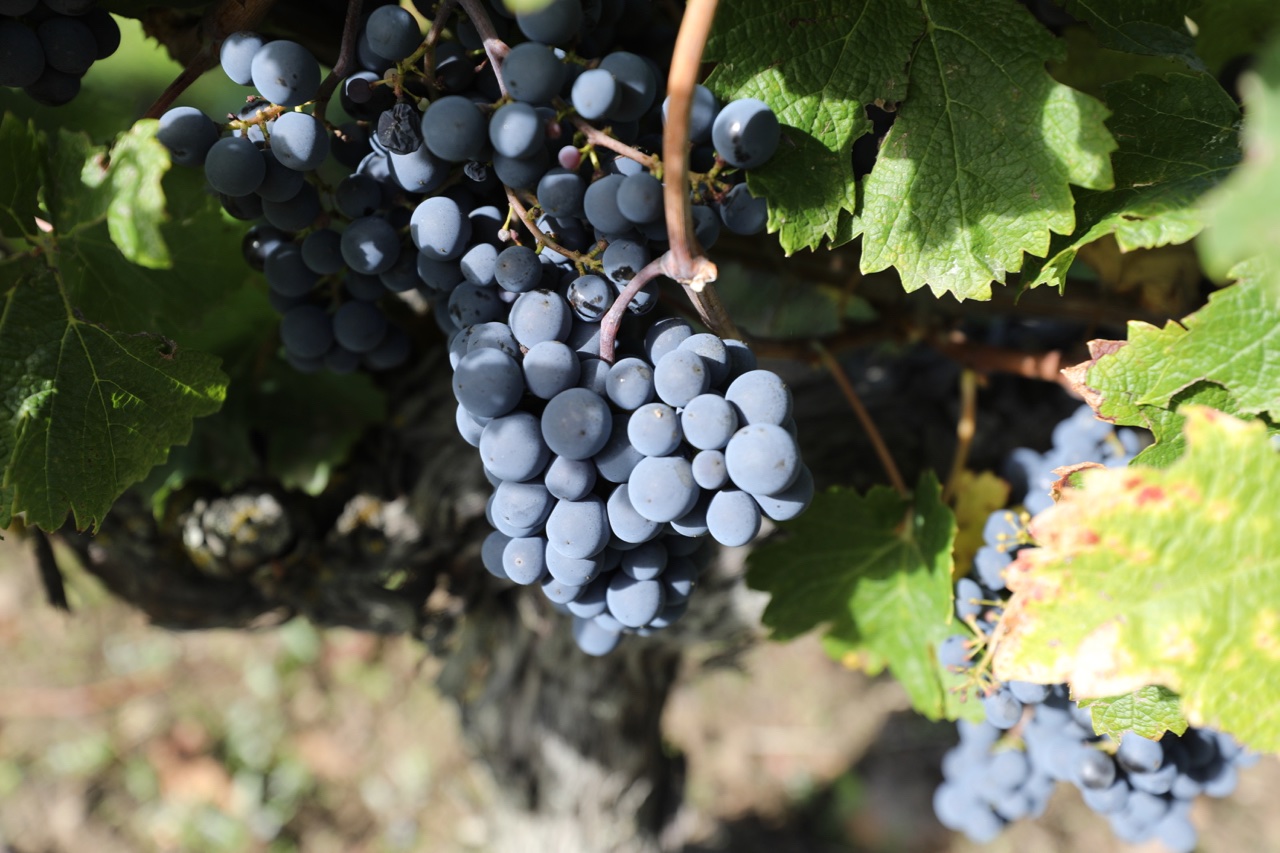
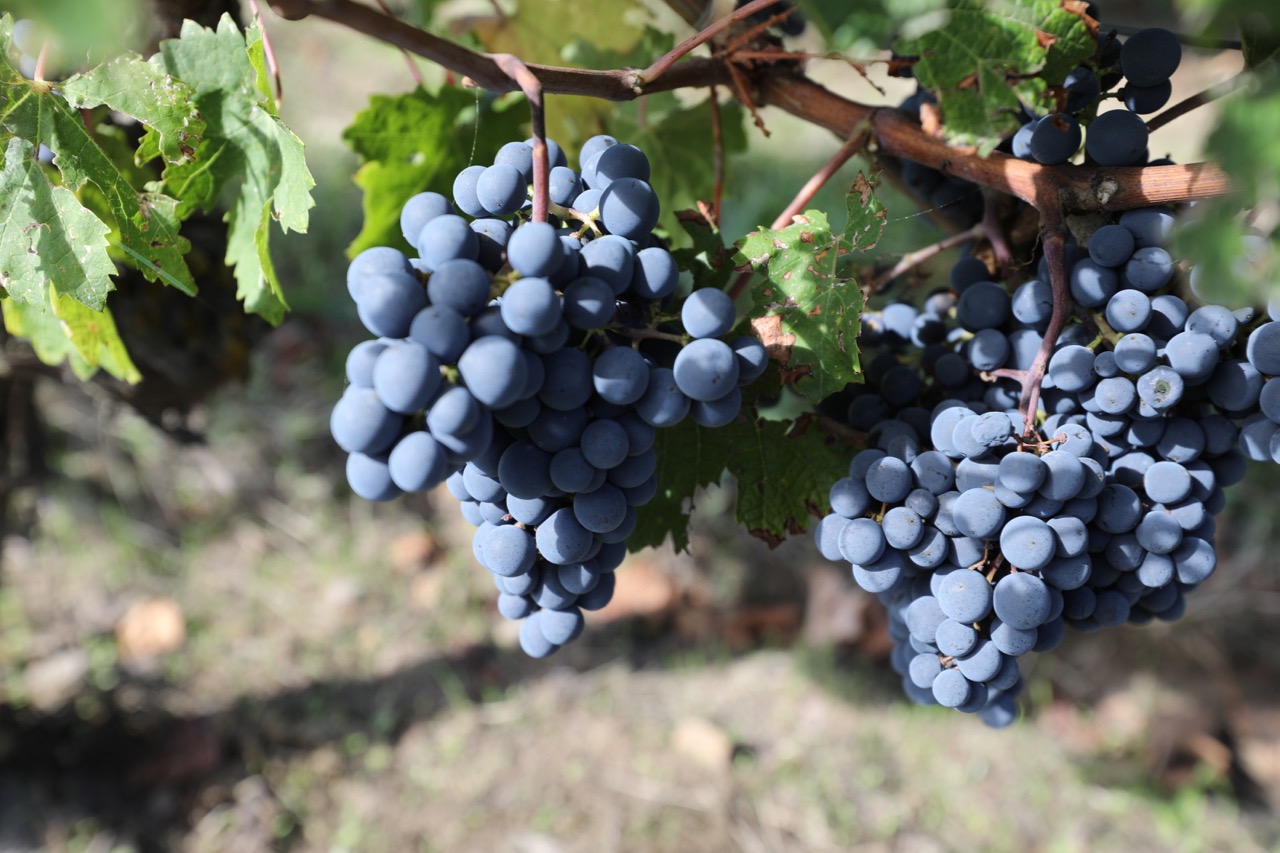
Picture perfect Cabernet Franc

We made a number of visits on Thursday 3rd October to vignerons to see how the 2019 harvest was progressing. The overall message is that 2019 is another quality vintage, that it is a very good vintage for whites with a better balance and freshness than 2018. However, unlike the generous 2018 vintage, 2019 is a small vintage due to a combination of factors – spring frosts, coulure and millerandage during flowering due to wet conditions in early June, drought and grapes being grilled by the sun.

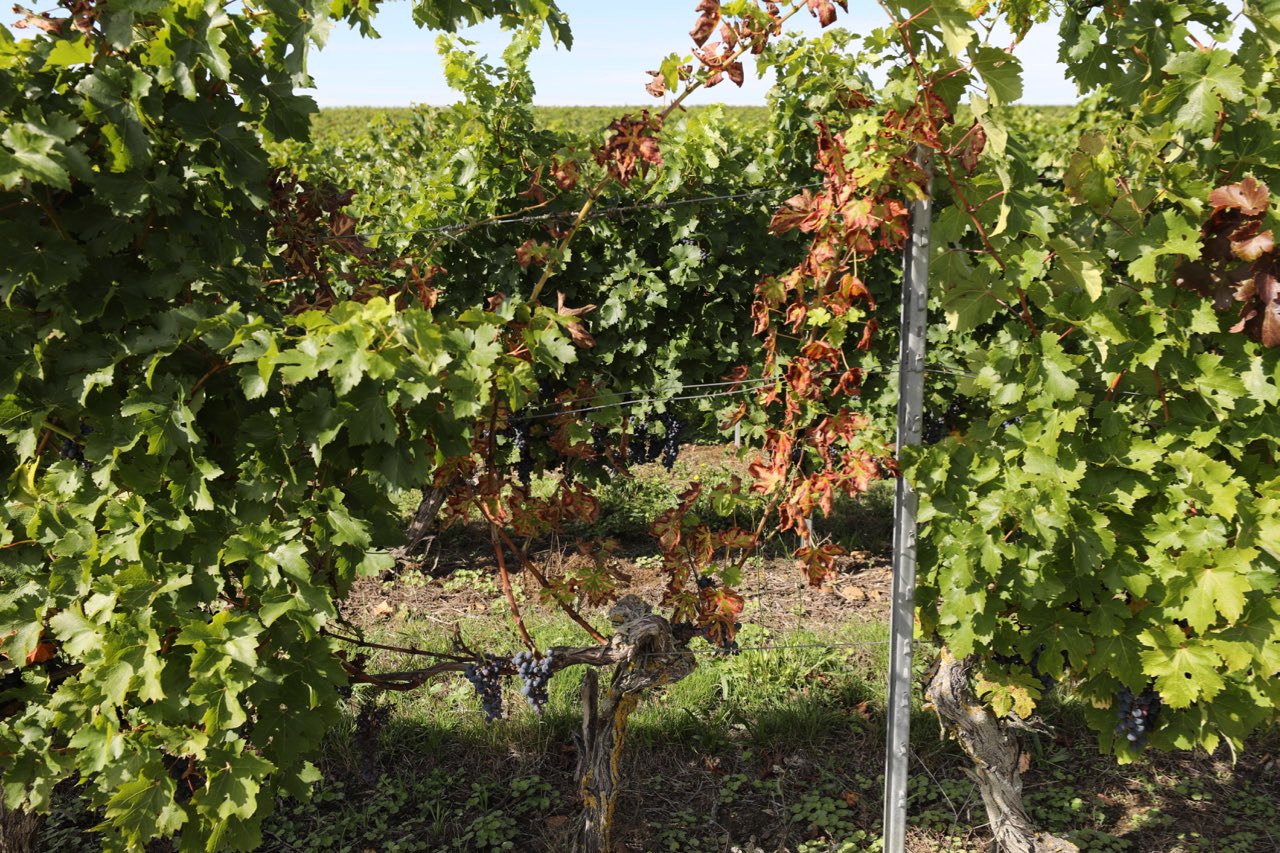
In last week's post I raised the frequency of grapes being frazzled by the heat spikes at the end of June and during July. It would appear that the spike at the end of July caused the most damage. It also seems that Chenin Blanc was more affected by the heat of the sun than Cabernet Franc.  Raising the height of the canopy is one way of providing more protection through increasing the amount of shade compared to vines with a low canopy.

As is often the case there were some who were only just starting – Anthony and Cedric Bonneau (Domaine de la Bonnelière – Saumur and Saumur-Champigny.  They had started that day on picking Cabernet for their rosé and would also be picking their Chenin Blanc for their Saumur Blanc. They had picked grapes destined for their Crémant de Loire between the 22nd and 24th September. However, they would only start picking their Cabernet Franc for Saumur Rouge and Saumur Champigny at the beginning of this week beginning 7th October. In contrast Antoine Sanzay, Jean-Pierre Chevallier (Ch de Villeneuve), Frédéric Mabileau, Yannick Amirault and Philippe Boucard (Lamé Delisle Boucard) were all close to finishing.

Higher foliage

Higher trained vines not only provide more foliage
but also increased shade give further protection against sunburnt grapes

Esca + hi foliage 
Example of higher foliage providing more shade
+ vine suffering from Esca

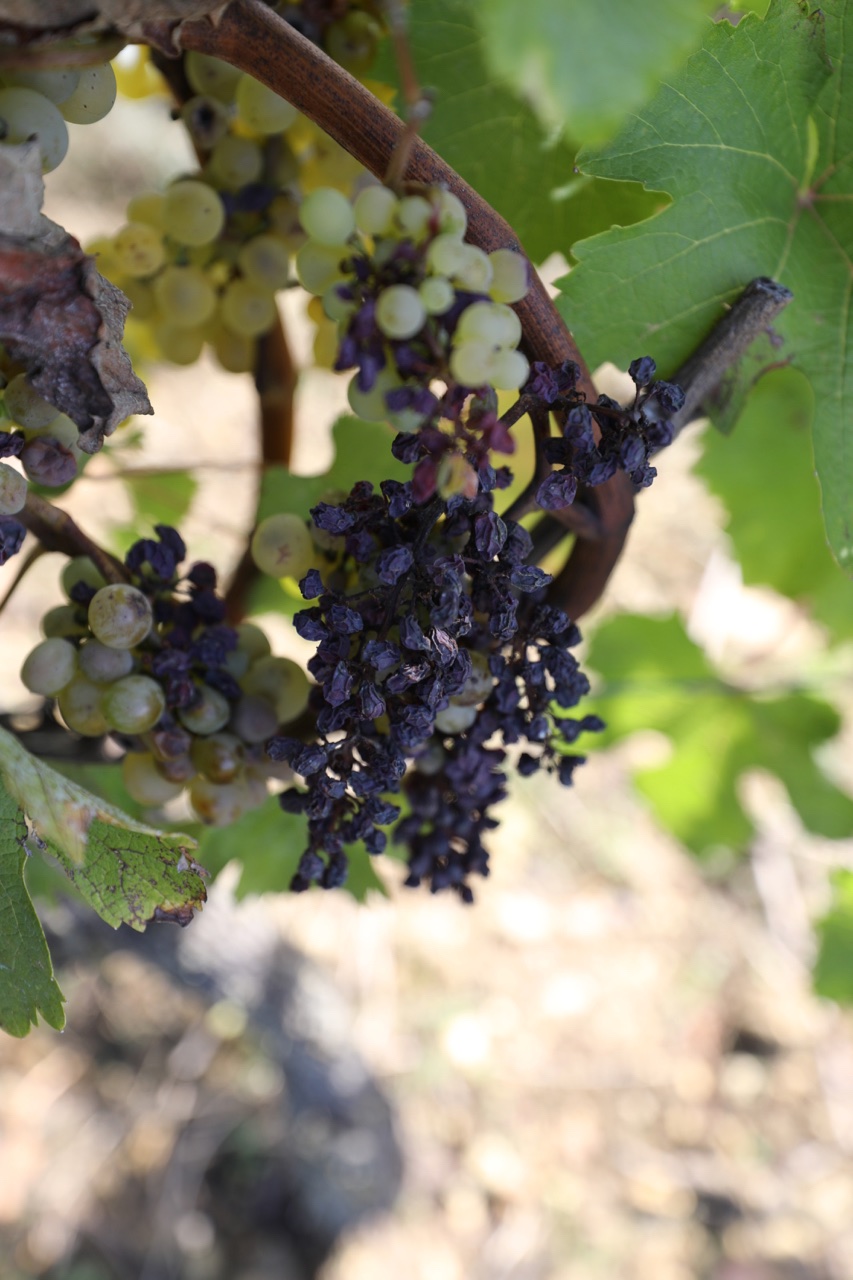
Chenin grillé 
Chenin Blanc grapes grilled by the sun, Saumur

Picking @Domaine de la Butte, Bourgueil

FredM - CF
Frédéric Mabileau– 2019 Cabernet Franc
again picture perfect fruit

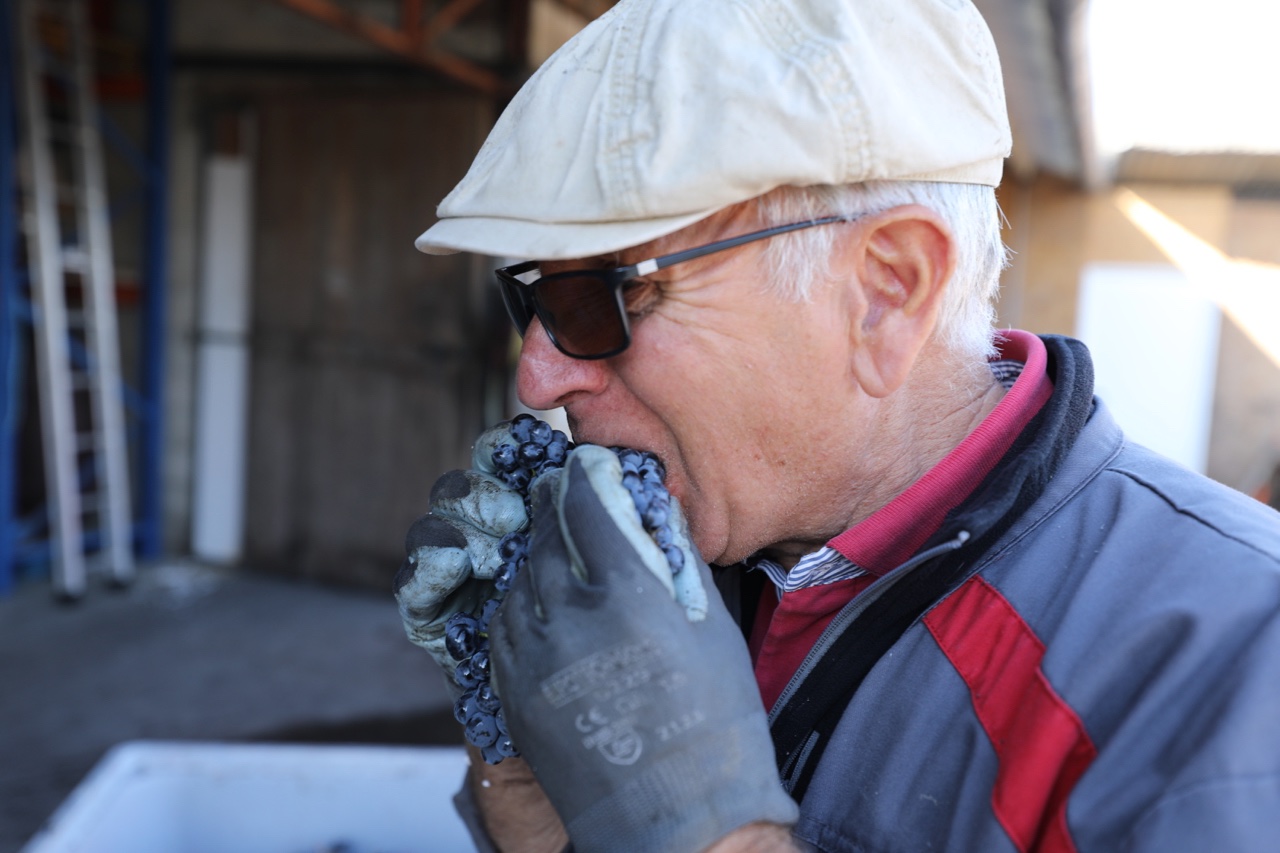
Jean-Paul bunch
Jean-Paul Mabileau (doesn't want to wait for the 2019 wine to be made
– he wants to enjoy the grapes now!

Yannick - maceration 
2019 Cabernet Franc macerating, Domaine Yannick Amirault
Bourgueil and Saint-Nicolas de Bourgueil

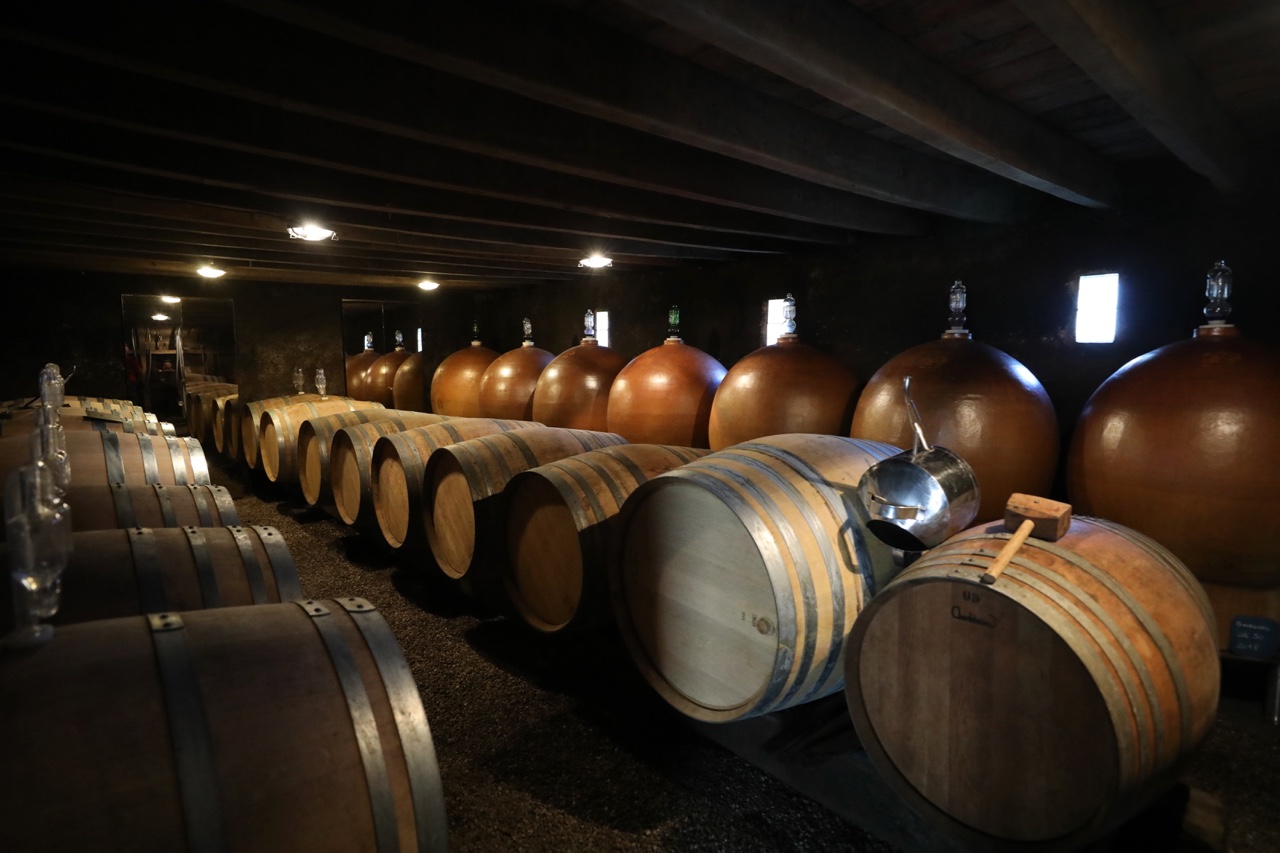
Yannick - barrels + eggs 
Barrels and amphores @Domaine Yannick Amirault

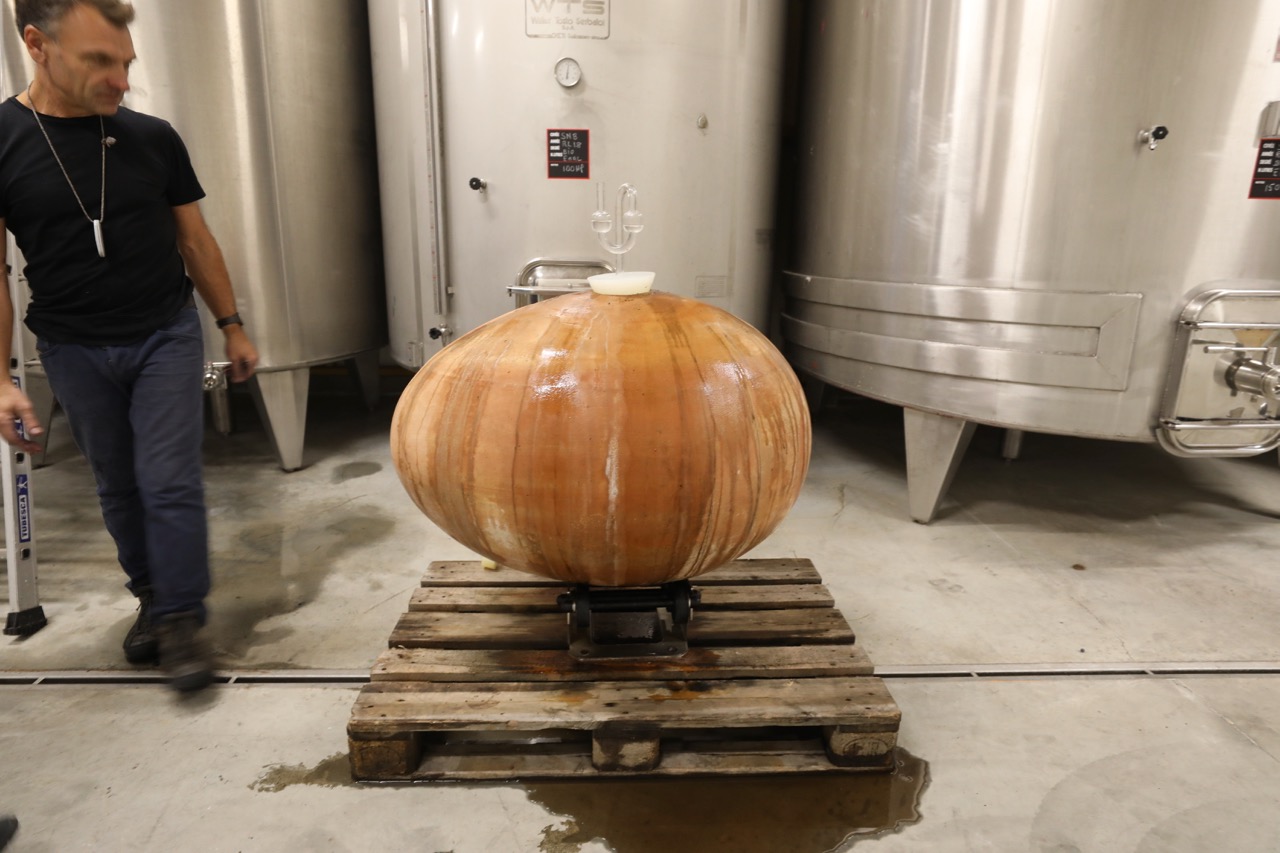
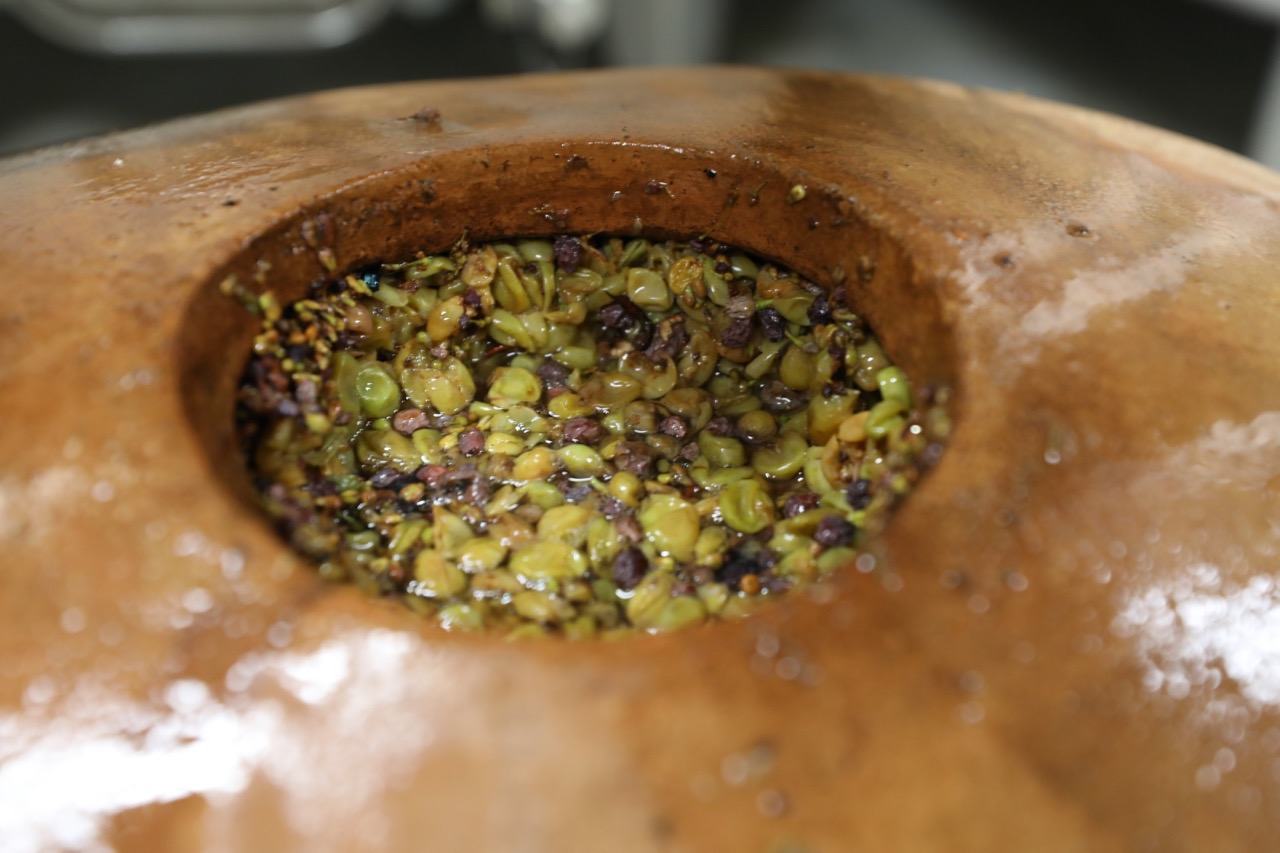
Fred's egg
Frédéric Mabileau and his small egg
containing Chenin Blanc with pips and skins

CB maceration Fred


•••

Antoine Sanzay's renovated cave 

Entrance AS
The entrance to the complex of caves

Antoine S - cave

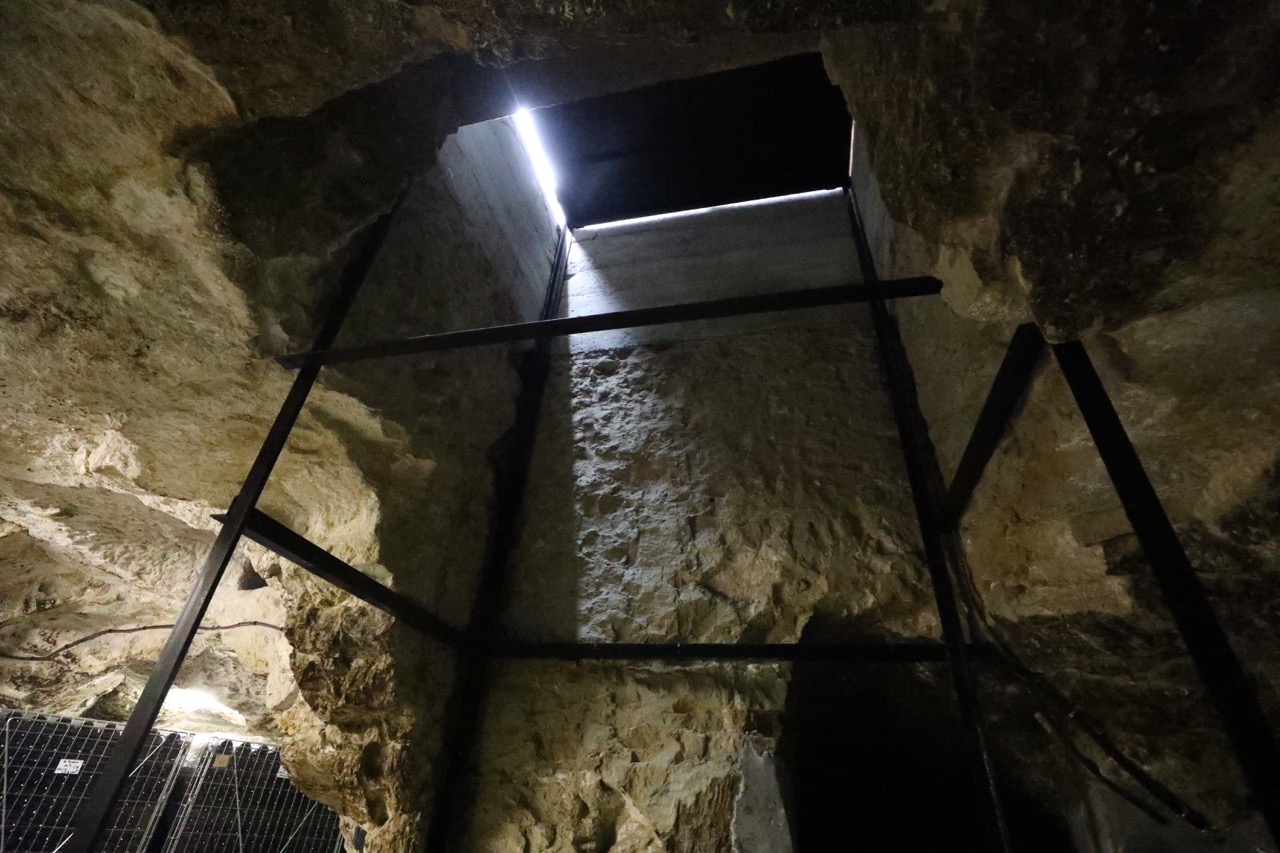
During our visit to see how 2019 was progressing at Antoine Sanzay (Varrains), he quickly showed his renovated cave. The complex of cellars, part of which was once a dwelling, has for many years existed but now they have been renovated to provide wine storage space. The major work was concreting the floor to make an easy and convenient surface.

AS-Lift shaft
Antoine has installed a lift for easy access for his wine

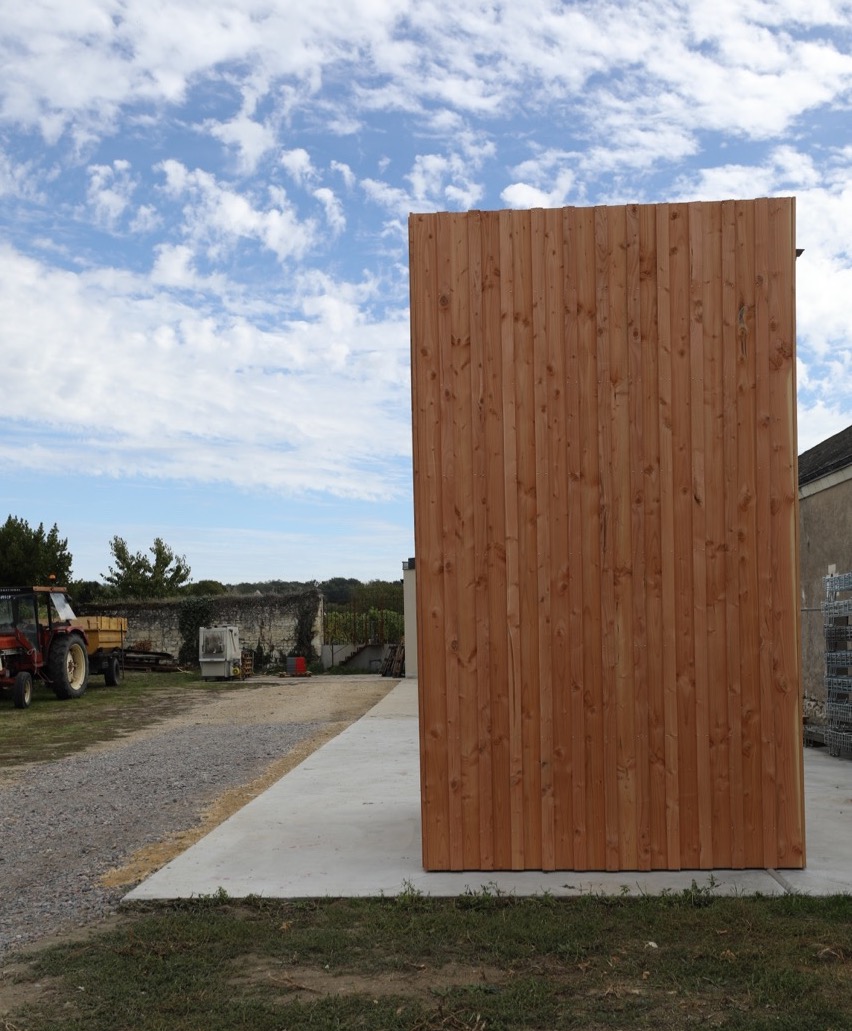
As Lift housing 
The lift housing 

Saturday, 29 June 2019

Amboise seeks Côt-solidation.......


 Ambition for a new Appellation 


During the heatwave water had pride of place....


On Thursday and Friday (27th and 28th June) I was in Amboise for the conference – Amboise and Côt. Amboise is seeking promotion from Appellation Touraine-Amboise to the cru status of Amboise, dropping the mention of Touraine in a move up the AOP pyramid. The intention is that the new Amboise appellation will be for wines from only two grape varieties – Côt for red and rosés and Chenin Blanc for whites.  It is hoped that this can all be concluded in three years time. I suspect that this timing is optimistic and agreement by the INAO and the French government is likely to take more time. 

This week's conference focused on Côt – also known in some parts of the world as Malbec. Côt producers from Amboise were joined by Auxerrois producers from Cahors. Auxerrois is the local for Côt in Cahors and apparently the original name for this grape variety. 

 Xavier Frissant, leading Touraine Amboise producer 
and President of Touraine-Amboise
A leading actor behind the push for AOP Amboise


Jérémy Arnaud
Terroir manager from Cahors
and animator of the conference

Henri Galinie 

Samuel Leturcq

Leonard Laborie


The morning of Thursday 27th was dedicated to a detailed explanation of the origins of Côt and to the similarities and differences between the climate, soils and topography Amboise and Cahors. There were four principal speakers: Henri Galinie (expert in the history of grape varieties in the Loire Valley), Léonard Laborie (historien chercheur au CNRS), Samuel Leturcq (maître de conférence en histoire médiévale à l'Université de Tours) and Françoise Vannier (expert des terroirs, Cabinet ADAMA).  

The parents of Auxerrois/Côt are the Madeleine Noir from Charentes and the Prunelard Noir with is origins in south west France. The the first textual mention of Côt in Touraine is in the latter part of the 18th Century. However, according to Henri Galinie, expert in the history of grape varieties in the Loire Valley, it is very likely that it was planted here during the 16th Century. 

The name Malbec comes from a Monsieur Malbec, who was either a nurseryman or a a producer or perhaps both who managed to make Malbec a popular variety in Bordeaux during the 19th Century from where it was widely exported to Australia, Argentina and Chile. Hence the current domination of the name Malbec. 

The tunnel under the Château d'Amboise   

After a steamy morning passed in the heat of the conference theatre we repaired to the very welcome cool of the tunnel under the Château d'Amboise to taste a range of wines from Amboise and Cahors. My comments on the wines will appear in a subsequent post.   


Tuesday, 2 April 2019

A long, lovely lunch Chez Olivia et Vincent....


BU0A8035

O+VGéant 
Olivia and Vincent @ Vincent le Cuisinier
Ingrandes de Touraine

The idea was to organise a lunch around the wines of Jo Pithon that we haven't yet drunk, especially his first real vintage – 2005 – from the Clos des Treilles. Jo hasn't kept many examples of his old vintages. Ivan Massonnat hadn't tasted the 2005, so it made sense to have a lunch at Vincent le Cuisinier in Ingrandes de Touraine with the 2005 as the centrepiece. Clearly one bottle, however good, would not suffice so we added a few more, while remaining moderate.

IMG_9316

As an apéro we opted for the 1961 Le Haut-Lieu demi-sec from Gaston Huet. It still had a youthful golden colour. It was initially quite austere but took on more weight when decanted giving a lovely balance of fruit and acidity.

We had intended to hold the lunch the day before but that was not possible. Holding it on the Saturday proved to be fortuitous as Jacques Pusais was also lunching Chez Vincent. Giving him a glass of the 1961 Huet to try led to us discovering that it was Jacques who vinified this vintage for Huet – the first of several at the domaine. Jacques was born in 1927, so it was good to see him in such good form.

BU0A8030
Jacques Pusais, Ivan Massonnat and Jo Pithon 

Vincent and Olivia kindly created a special menu for us to go with the wines. For this they charged us a remarkably reasonable 39€ per person.

IMG_9317
entrée
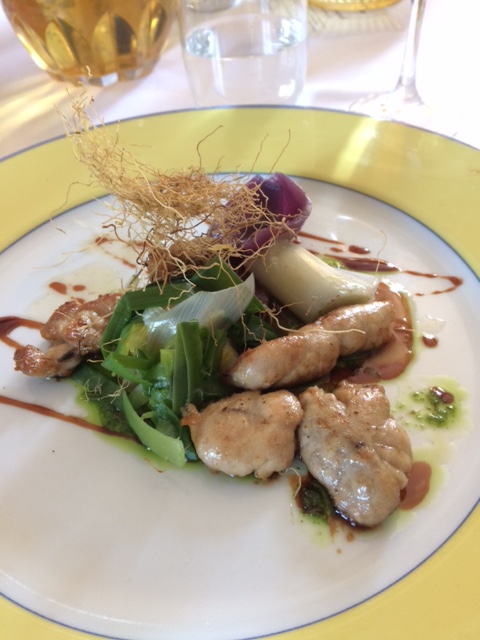
Ris d’agneau roulés au beurre fermier,
jeunes poireaux et poêlée de betteraves
 
 
IMG_9336 (1)
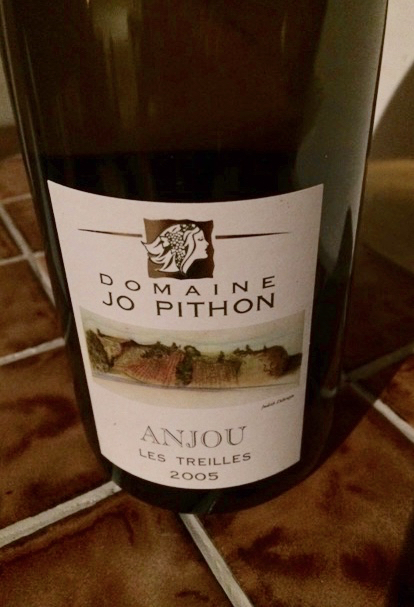
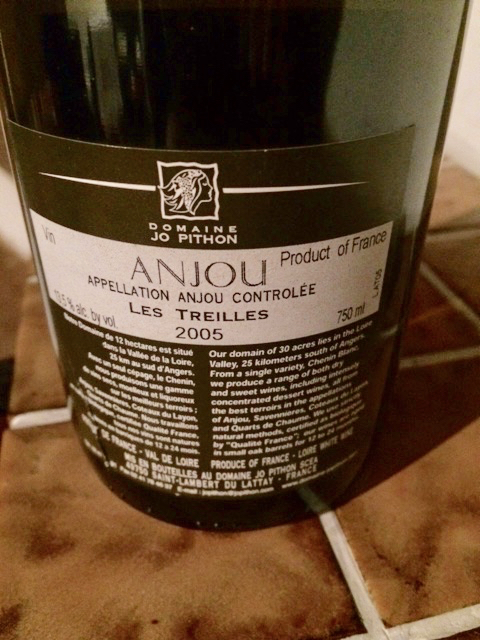
2005 Les Treilles. Anjou, Domaine Jo Pithon (100% Chenin)
 
IMG_9337 (1)
 
 
Happily the 2005 turned out to be the real star of our meal with its great vivacity and energy. With its lovely texture, balance and finesse it went well with all of the dishes with perhaps the exception of the dessert. We served it with the entrée and kept it on the table.
 
 
IMG_9314
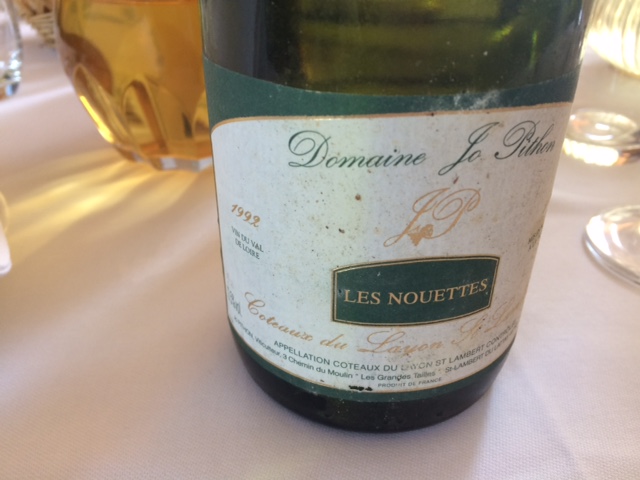
1992 Les Nouettes, Coteaux du Layon,
Saint Lambert du Lattay, Domaine Jo Pithon
 
This was remarkably impressive for a 1992, a decidedly difficult year starting with a very big crop as the vines had had a year off due to the terrible frost of 1991 and then the weather during harvest wasn't favourable with plenty of grey rot. It was fascinating hearing Jo talk about the measures and precautions they had to take to achieve this result – very clean, quite rich with well balanced length. Its richness matched the sweet succulence of the riz de veau.
 
Poulet-flambé
Vincent is not a man to be trifled with ......
 
 
IMG_9319
 
Poulet de notre vigne , cuit en cocotte
en deux services
la poitrine , Bourgueilette de légumes
la cuisse , jus réduit au thym


IMG_9318
 
 
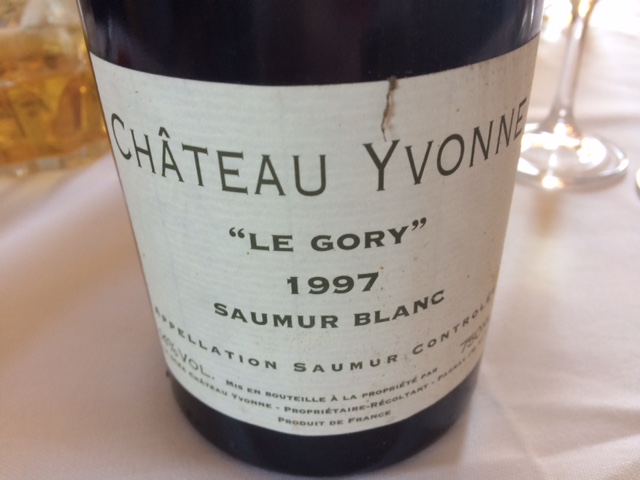
The 1997 Le Gory, Saumur Blanc was made by Françoise Foucault, the wife of the late Charly Foucault. The 1997 is very rich, concentrated and powerful with still some traces of new wood. Although impressive it didn't have the finesse of the very food-friendly Les Treilles.
 
IMG_9320
 

This one is definitely reserved for special occasions like this – 1989 Dioterie, Chinon, Charles Joguet. Initially it was rather closed with notes of green pepper but in the decanter it opened up revealing lovely soft texture, complexity and length. Still youthful at 30 years.
 
IMG_9322
 
dessert
Pomme rôtie longuement
Biscuit d’épices , une escalope de foie gras pochée
 

Desserts are the preserve of Olivia and this one is very unusual as it features a slice of foie gras – utterly delicious!
 
 
IMG_9321
1993 Clos du Bois, Coteaux du Layon Saint Aubin,
Domaine Jo Pithon

Another very impressive wine from a far from easy vintage – not as difficult as 1992 admittedly. The 1993 Clos du Bois was richer and more concentrated than the 1992 Les Nouettes. It had lovely rich fruit – apricot confit, very fine texture matched with good acidity and a long finish. Making wine this good in a difficult year is the mark of a great vigneron! Chapeau Jo !  

BU0A8033.jpg
The evidence of modération
– none of the bottles were emptied by us


Vincent cuisinier de campagne
19 Rue de la Galottière, 37140 Ingrandes-de-Touraine
Téléphone : 02 47 96 17 21

Thursday, 21 February 2019

Is Quarts de Chaume about to become very rare?

Cartographie Chaume et Quarts-de-Chaume sans géols

Green is Chaume 1er Cru and pink is Quarts de Chaume

Two new and wonderfully detailed maps of the Quarts de Chaume
and Coteaux du Layon 1er Cru Chaume
Source: Fédération Viticole Anjou-Saumur 

Cartographie Chaume et Quarts-de-Chaume avec géols
Geological map of Coteaux du Layon 1er Cru Chaume
Clearly indicating how complex the soils are in this small area

2019 is a significant year for Quarts de Chaume – one of the world's greatest expressions of Chenin Blanc. It will be the last vintage that cryoextraction, or cryoselection as some prefer to call it, will be allowed under the décret of November 2011. This transitional arrangement comes to an end in 2019. From 2020 it will hopefully be impossible to make Quarts de Chaume from unripe, green grapes and foist it onto the consumer as the real thing.

However, despite a series of good to excellent vintages there is every prospect that Quarts de Chaume, already a small appellation of 40 hectares, will become increasingly rare. The problem is simple we are not buying and drinking enough sweet wine. Now there is a marked move to making dry Anjou Blanc from the vines of the Quarts de Chaume.

QuartsdeC+hamlets
Hamlet of Chaume and the surrounding Q de C vines 

The arrival of two important new players – Kathleen Van den Berghe and Sigurd Mareels (Château Suronde) and Ivan Massonnat (Domaine Belargus) – has highlighted the problem and the direction that a significant proportion of the production from vines in the Quarts de Chaume will take. Belargus has 10 hectares of vines in Quarts de Chaume and Suronde 5.5 hectares making a total of 15.5 ha or 38.75% of the appellation's total area.   

Surondes
View towards Suronde

Suronde's website clearly sets out their wine producing policy.

'Château de Suronde is the perfect complement to Château de Minière (Bourgueil), with white wines from Chenin Blanc that can be sweet, semi-sweet and dry, both still and sparkling. Château de Suronde will produce mainly dry white wine, and will produce the iconic sweet Quarts de Chaume wines in the best vintages only.'

Only sweet wines that meet the appellation's criteria can be Quarts de Chaume – dry, semi-sweet will be Anjou Blanc, while the sparkling can be either Anjou Mousseux or Crémant de Loire depending on the production methods used.

Ivan Massonnat (Belargus) intends to make 80% dry wines from his 10 hectares. This percentage is likely to be even higher in average to poor vintages. It was Jo Pithon who fortunately persuaded Massonnat to make some Quarts de Chaume in 2018. Pithon pointed out that even though sweet wines are difficult to sell they can remain in a grower's cellar for many years without losing value.

E part of IM QdeC
Part of Belargus's holding in lieux-dit Les Quarts

Suronde and Belargus are not alone. Guy Rochais (Château de Plaisance) is also making  dry wines in the Quarts de Chaume and is amongst those pushing for a superior appellation for the best of Anjou Blanc sec – in this case, perhaps, Anjou Blanc Chaume.

What of Domaine des Baumard's six hectares of Quarts de Chaume? From the 2020 vintage when cryo-extraction is banned making it impossible for the domaine to make some 80 hectolitres of ersatz 'Quarts de Chaume' as they did in the awful 2012 vintage when over 200 mls of rain fell during the crucial month of October.  

Actually it was legally impossible in the 2012 vintage but the INAO chose to turn a blind eye – forget any notion that this organisation stands up for the consumer. In less than ideal vintages will Domaine des Baumard now choose make a proportion of dry white from their six hectares?

My guess is that producers, like Domaines de la Bergerie, Ogereau and others with just a small parcel in the Quarts de Chaume will continue to try to make 100% sweet wine from their parcels unless weather conditions make this impossible.
Stats from InterLoire show that between 2012 and 2016 the maximum area declared as Quarts de Chaume was 35 hectares (2014), while the lowest was 6 hectares in 2012......  Will the area declared reach 35 hectares in the near future?
It is difficult to blame the producers for choosing to reduce their production of sweet wine in favour of dry ones. How can you expect them to go on making wines that in order to be great require tiny yields, with the attendant big risks of late harvest and the additional expense of successive pickings, if they cannot sell them no matter how good these sweet wines are?

This development sets lovers of a sweet wine a challenge. If you want these wines to continue to be made in reasonable quantities you must be prepared to drink more of them. Here I am as guilty as anyone. I love sweet wines, especially those from the Loire with their magical balance of sweetness and acidity. However, when I reflect at the end of the year on the number of bottles of sweet wines that I have drunk – I may only need the fingers of one hand and only rarely more than two!

This lack of consumption is not peculiar to Quarts de Chaume or other Loire sweet wines, Sauternes and other great sweet wines face similar problems in a dry white market. Some would say let market forces rule. If a type of wine is difficult to sell them what's the problem if it disappears.... Although, of course, market forces are necessarily a major influence, if it wasn't for some stubborn and courageous producers some of wine's diversity would have been lost. The wine world would be a a sea of international wine varieties. The marvels of good sherry might well have disappeared. etc. etc. 
It is still possible to enjoy and marvel at sweet Vourvays or those from the Layon from 1947 because a reasonable quantity was made. Will that still be the case for potential great vintages like 2018 and those to come in the future in 70 years time? For the sake of future generations of wine lovers I hope so! 

As wine communicators we need to highlight the qualities of great sweet wine and the different occasions to drink them. It doesn't help that too many in the British wine and hospitality trade and in other countries foolishly and inaccurately describe these magical wines as 'dessert' wines.


JB-QuartsdeChaume_0001

Un Grand Vin du Monde – Quarts de Chaume by Jean Baumard
I don't often agree with Jean Baumard but I do agree with his book's title Quarts de Chaume – Un Grand Vin du Monde (published 2007) – assuming that the wine complies with the décret in force from the 2020 vintage. Unfortunately Quarts de Chaume is facing some testing times and is under a possible threat, which I hope will receive some airtime during the International Chenin Blanc Seminar at the start of July in Angers.